What is Spinal Cord?
According to Wikipedia,
The spinal cord is a long, thin, tubular structure made up of nervous tissue that extends from the medulla oblongata in the lower brainstem to the lumbar region of the vertebral column (backbone) of vertebrate animals. The center of the spinal cord is hollow and contains a structure called the central canal, which contains cerebrospinal fluid. The spinal cord is also covered by meninges and enclosed by the neural arches. Together, the brain and spinal cord make up the central nervous system.
Overview
What is Spinal Cord?
Your spinal cord is a cylinder-shaped tube of tissue that runs through the center of your spine, from your brainstem to your lower back. It’s made of nerves and cells that carry messages from your brain to the rest of your body. Your spinal cord is one of the main parts of your nervous system.
Spinal Cord Anatomy
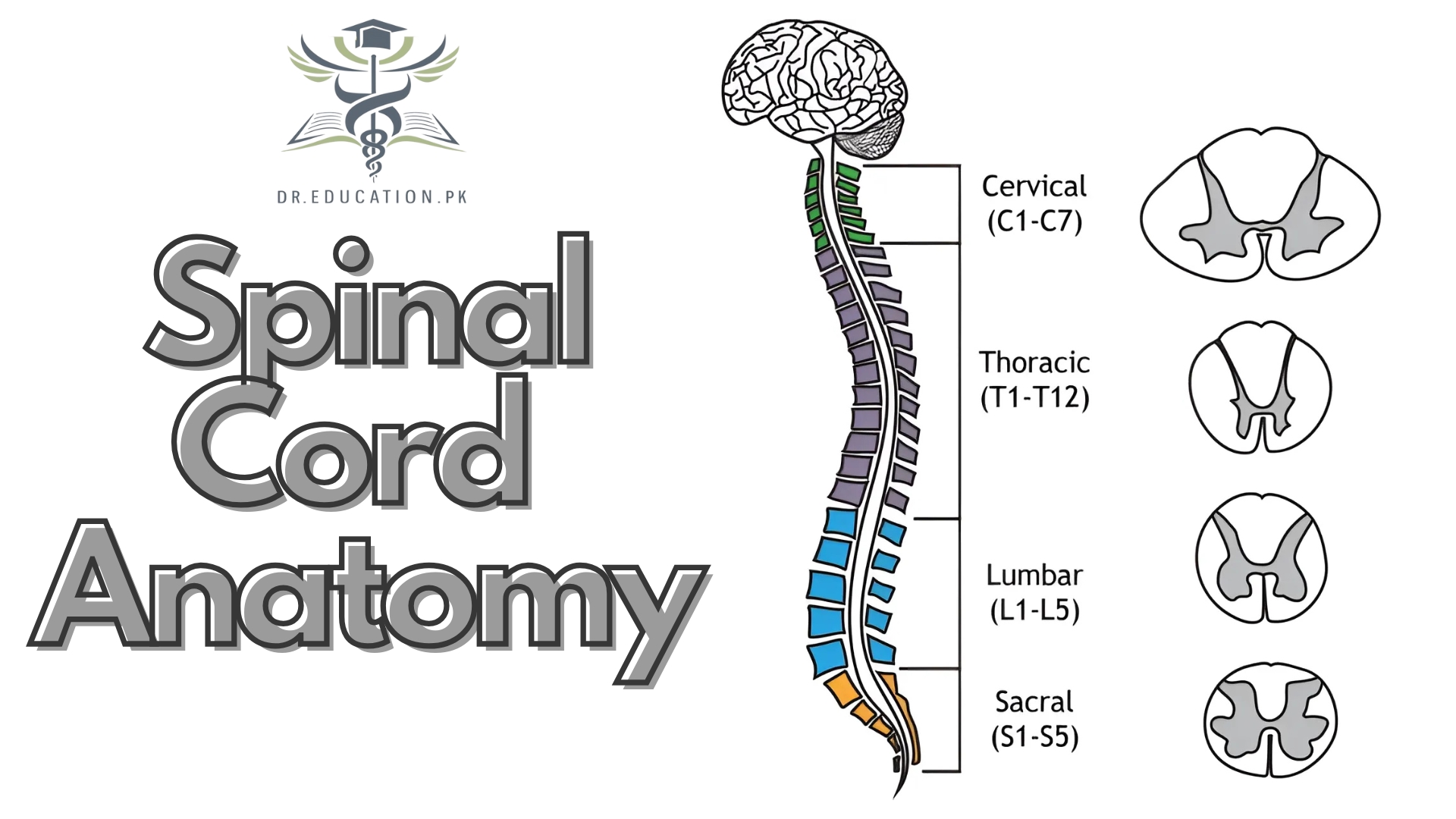
The spinal cord is a vital part of the central nervous system, along with your brain. It’s around 50 centimeters long, though the length may vary in different individuals. The spinal cord is divided into four regions:
- Cervical
- Thoracic
- Lumbar
- Sacral
 It is covered by the meninges, which consists of three layers:
- Dura mater. This is the tough, outermost layer tasked with protecting your spinal cord from injury.
- Arachnoid mater. This thin, transparent central layer gets its name from its spider-web-like appearance.
- Pia mater. The innermost layer of connective tissue is called the pia mater. It directly connects to your spinal cord.
The cervical (neck) and the lumbar (lower back) components of the spinal cord are comparatively larger than the other regions. The lowest part of the spinal cord is called the “cauda equina,” which in Latin means the “horse’s tail.” It received this name because the nerve bundle in this part resembles a horse’s tail.
The spinal cord is surrounded by cerebrospinal fluid, which suspends it within the 33 vertebrae of the spinal column. Small nerves from the spinal cord branch out from this cylindrical tube. They are called roots and move out through small openings between the vertebrae and connect to different body parts.
Which nerves are in the spinal cord?
There are 31 nerves connected to your spinal cord. Thirty of your spinal nerves are pairs (one on each side of your spinal cord), including:
- Eight cervical nerve pairs starting in your neck and running mostly to your face and head.
- Twelve thoracic nerve pairs in your upper body that extend to your chest, upper back and abdomen.
- Five lumbar nerve pairs in your lower back that run to your legs and feet.
- Five sacral nerve pairs in your lower back near your sacrum (the bottom part of your spine) that extend into your pelvis.
The final nerve is a bundle at the base of your spine called the cauda equina that gives sensation to your lower body.
Cross-section of the spinal cord
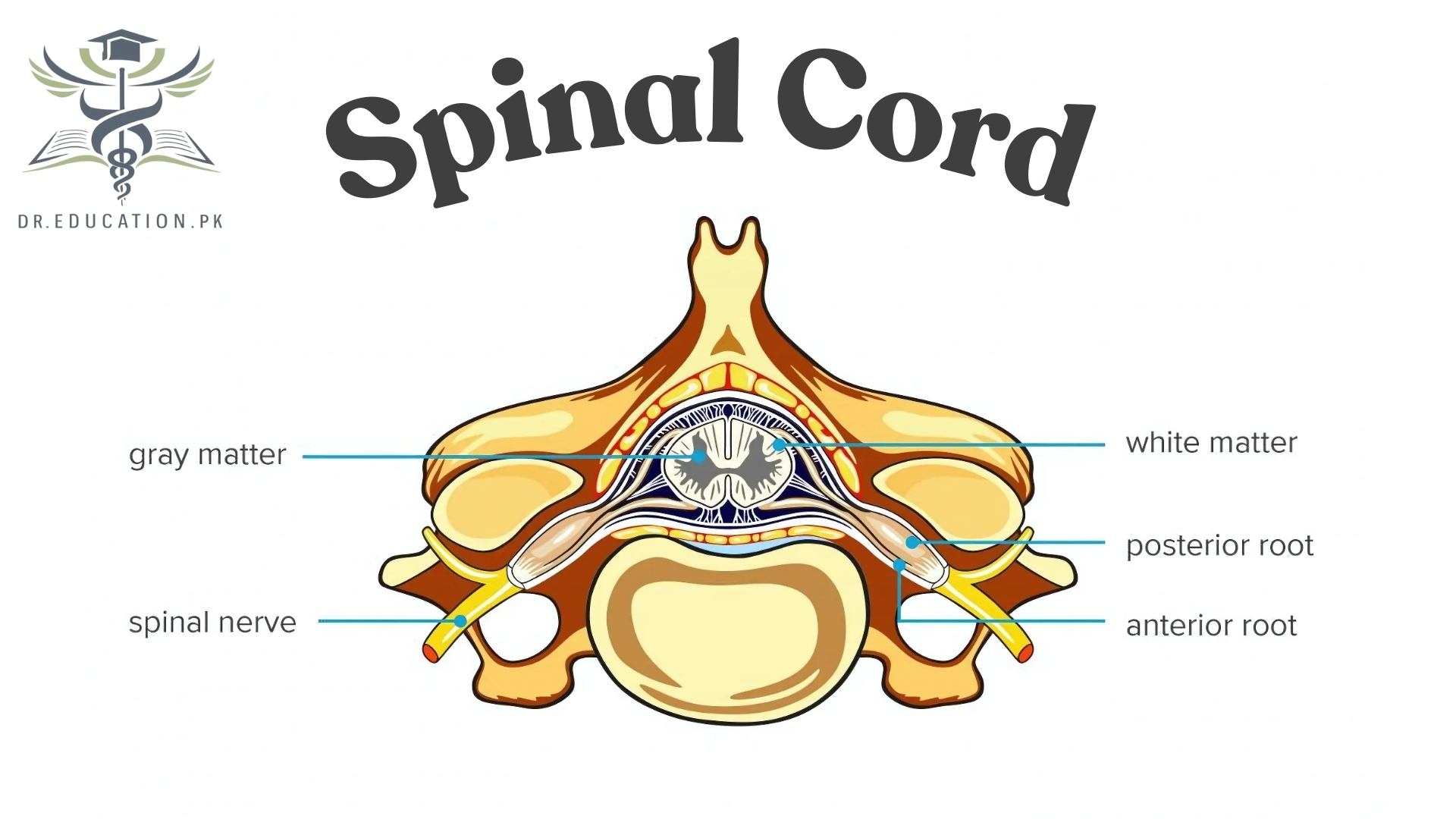
If a person were to take a “slice” of the spinal cord horizontally, they would see a circular area in the middle covered in protective layers (the meninges). Extending from this circular area are nerve projections. These extend from the spinal cord to provide sensation to different areas in the body.
Key areas of a cross-section of the spinal cord include:
- Gray matter: The gray matter is the dark, butterfly shaped region of the spinal cord made up of nerve cell bodies.
- White matter: The white matter surrounds the gray matter in the spinal cord and contains cells coated in myelin, which makes nerve transmission occur more quickly. Nerve cells in the gray matter are not as heavily coated with myelin.
- Posterior root: The posterior root is the part of the nerve that branches off the back of the spinal column. Looking at the spinal cord cross-section, the top wings of the gray matter “butterfly” reach toward the spinal bones. The bottom wings are toward the front of the body and its internal organs.
- Anterior root: The anterior root is the part of the nerve that branches off the front of the spinal column.
- Spinal ganglion: The spinal ganglion is a cluster of nerve bodies that contain sensory neurons.
- Spinal nerve: The posterior and anterior roots come together to create a spinal nerve. There are 31 pairs of spinal nerves. These control sensation in the body, as well as movement.
The spinal cord does not extend for the entire length of the spine. It usually stops in the top parts of the lumbar spine.
For adults, this is usually the first or second lumbar vertebrae. Children’s spinal cords may stop slightly lower, at the second or third lumbar vertebrae.
What are the epidural and arachnoid spaces?
The epidural space is between the dura mater and arachnoid mater. It’s where healthcare providers insert epidurals during labor and childbirth.
The subarachnoid space is between the arachnoid mater and the pia mater. Here, cerebrospinal fluid (CSF) provides extra cushioning and protection for your spinal cord. If you need a lumbar puncture (spinal tap), a healthcare provider will insert a needle into the subarachnoid space, remove a sample of your CSF and test it for signs of infection.
Function
What does the spinal cord do?
Your spinal cord carries nerve signals from your brain to the rest of your body and back. The signals are electrical messages that help almost everything in your body work correctly, including:
- Controlling your body’s movements and functions: Signals from your brain to other body parts let you move when you want to. They also control involuntary (autonomic) functions like your heartbeat and breathing. Involuntary functions happen automatically without you thinking about them.
- Reporting senses to your brain: Nerve signals from all over your body help your brain process and feel all of your senses, including pressure and pain.
- Managing your reflexes: Reflexes are automatic physical responses. The patellar reflex makes your lower leg kick forward when a healthcare provider taps your shin just below your kneecap (patella). Your spinal cord controls some reflexes without involving your brain.
Your spinal cord is like a much more important version of the cable that sends and receives your TV signal. Instead of transferring data back and forth about your favorite shows and movies, your spinal cord carries all the messages that help your body function and stay connected to your brain.
Spinal Cord vs. Vertebral Column
The spinal cord is often confused with the vertebral column, but the two are distinct. While the spinal cord is a soft layer of tissue consisting of nerves and cells, the vertebral column is a hard structure made of bone that covers the spinal cord and protects it.

Spinal Cord Conditions
Any disruption of spinal cord activity due to injury or disease could lead to serious conditions, including the loss of motor and sensory functions. In severe cases, this loss could be permanent.
- Spinal fractures. When the bones in the neck, spine, and back break, that can cause spinal fractures. Fractures can occur due to trauma, accidents, or genetic conditions.
- Spinal deformities. These can occur due to conditions such as scoliosis and kyphosis that cause abnormal curvatures in the spine. Such deformities can also occur due to spinal fractures or other conditions like spondylolisthesis and ankylosing spondylitis.
- Ankylosing spondylitis. This is a type of arthritis that causes inflammation between the bones in the spine. Sometimes, inflammation also occurs in the joints where the spine and your pelvis meet. Men are more likely to encounter this condition.
- Spondylosis. The spine’s vertebrae and the discs between the spinal cord bones wear out in cases of spondylosis, which can occur in the cervical region (in which case it is called cervical spondylosis) or in the lumbar and thoracic regions ( in which case it is called lumbar spondylosis or thoracic spondylosis, respectively).
- Spinal stenosis. The spine narrows due to injury or a disease such as osteoarthritis, putting undue pressure on the spinal cord and the nerves.
- Herniated discs. A herniated disc is a condition where one of the gel-like discs between the vertebrae breaks and puts pressure on one of the nearby nerves. This may lead to other conditions, such as sciatica and back pain.
- Degenerative disc disease. Also known as osteoarthritis of the spine, this is a condition where the discs between the vertebrae become dry and wear out. This typically occurs in old age, but impact injuries can also be the cause.
- Spinal tumors. When there’s an unusual tissue collection in and around the spinal cord or the spinal column, it may become a tumor. Malignant (cancerous) tumors are more harmful and can occur when tumors from other parts of the body spread to the spine.
Care
How can I keep my spinal cord healthy?
You can keep your spinal cord (and entire back) healthy by following these general tips:
- Follow a nutritious eating plan.
- Stay physically active and stretch often.
- Adjust your posture often throughout your day.
- Sleep in positions that support the natural curve of your neck and lower back.
- Quit smoking and avoid other tobacco products.
- Limit how much alcohol you drink and avoid recreational drugs.
Conclusion from Dreducation.pk
- In conclusion, the spinal cord plays a crucial role in maintaining the connection between the brain and the rest of the body, serving as a central hub for transmitting nerve signals.
- Its anatomy, with distinct regions and protective layers, ensures the efficient communication of sensory and motor signals while safeguarding it from injury.
- Proper care, including a healthy lifestyle and attention to posture, is vital to prevent spinal cord-related conditions and maintain overall nervous system health.
- By understanding its structure and functions, we can better appreciate the spinal cord’s significance and take steps to protect this essential part of our body.