
Typhoid Fever
According to Wikipedia,
Typhoid fever, also known simply as typhoid, is a disease caused by Salmonella enterica serotype Typhi bacteria, also called Salmonella typhi. Symptoms vary from mild to severe, and usually begin six to 30 days after exposure. Often there is a gradual onset of a high fever over several days.
Overview
What is Typhoid Fever(Enteric Fever)?
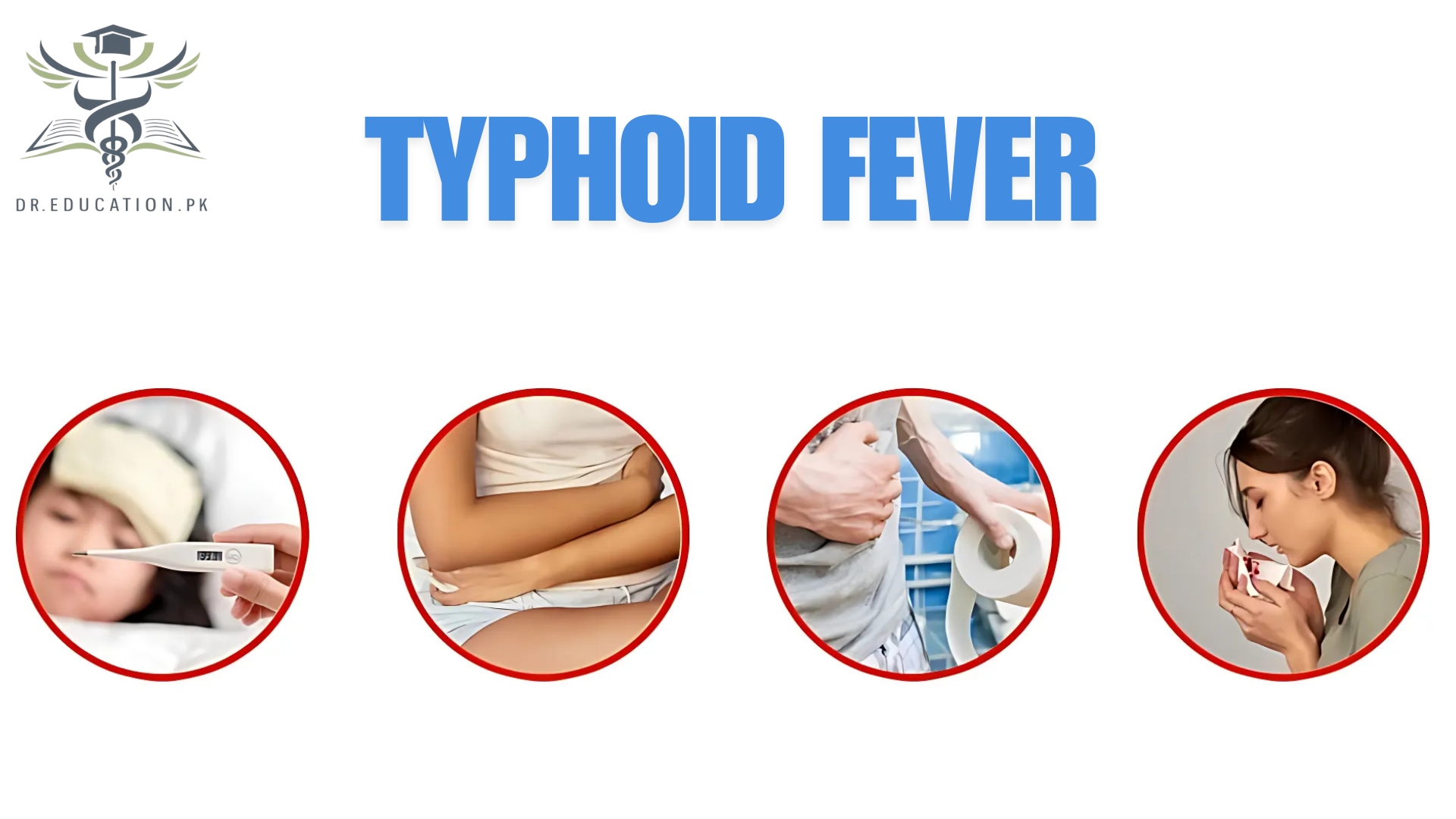
Typhoid fever, also called enteric fever, is caused by salmonella bacteria. Typhoid fever is rare in places where few people carry the bacteria. It also is rare where water is treated to kill germs and where human waste disposal is managed. One example of where typhoid fever is rare is the United States. Places with the highest number of cases or with regular outbreaks are in Africa and South Asia. It is a serious health threat, especially for children, in places where it is more common.
Food and water with the bacteria in it cause typhoid fever. Close contact with a person who is carrying the salmonella bacteria also can cause typhoid fever. Symptoms include:
- High fever.
- Headache.
- Stomach pain.
- Constipation or diarrhea.
Most people who have typhoid fever feel better about a week after they start treatment to kill bacteria, called antibiotics. But without treatment, there is a small chance of death from typhoid fever complications. Vaccines against typhoid fever can provide some protection. But they can’t protect against all cases of illness caused by other strains of salmonella. Vaccines can help lower risk of getting typhoid fever.
What’s the difference between typhoid and typhus?
While the names sound the same, typhoid and typhus are different illnesses, caused by different bacteria. The symptoms are similar — so much so that doctors used to think they were the same illness. We now know they’re different illnesses, but the similar name stuck (and so did the confusion it causes).
Typhoid Fever Symptoms
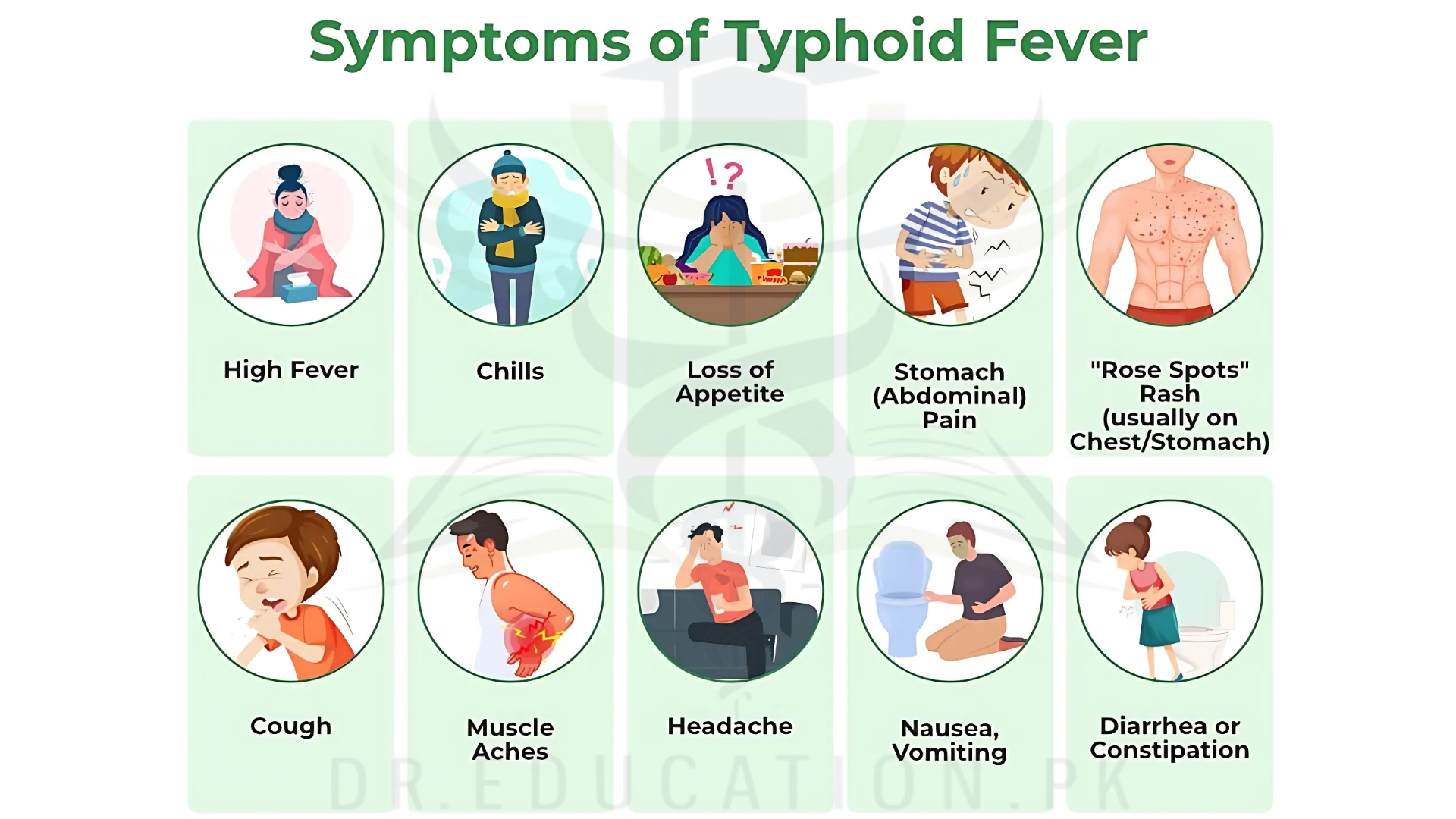
After you come in contact with the germ that causes typhoid fever, it may take a while for you to get sick. Your symptoms usually show up in 1-3 weeks.
At first, you may get:
- Fever that can be as high as 103-104 F and may rise one night, fall the next morning, and then continue to rise and fall
- Headaches
- Chills
- Weakness and fatigue
- Muscle aches
- Sweating
- Cough
- Loss of appetite
- Diarrhea or constipation
- A rash of flat, warm pink spots, usually on your chest or stomach
A few weeks after your symptoms start, you may also get severe stomach swelling and pain or an infection called sepsis, affecting the entire body.
In serious cases, you may get life-threatening complications, such as:
- Confusion
- Inability to pay attention
- Inability to respond
- High fever
- Brain symptoms, such as confusion or seizures
- Coughing up or vomiting blood
- Serious stomach pain
- Bloody or tarry (dark, thick, and sticky) poop
Typhoid fever rash
Typhoid fever sometimes causes a rash called “rose spots.” About 30% of people who get infected with Salmonella Typhiget rose spots. In people with light skin tones, rose spots usually appear as groups of 5-15 warm pink spots about the size of a grain of rice or slightly smaller. They tend to last about 3-5 days and are usually on your chest or stomach, but they may also appear on your back, arms, and legs.

What are the stages of typhoid fever?
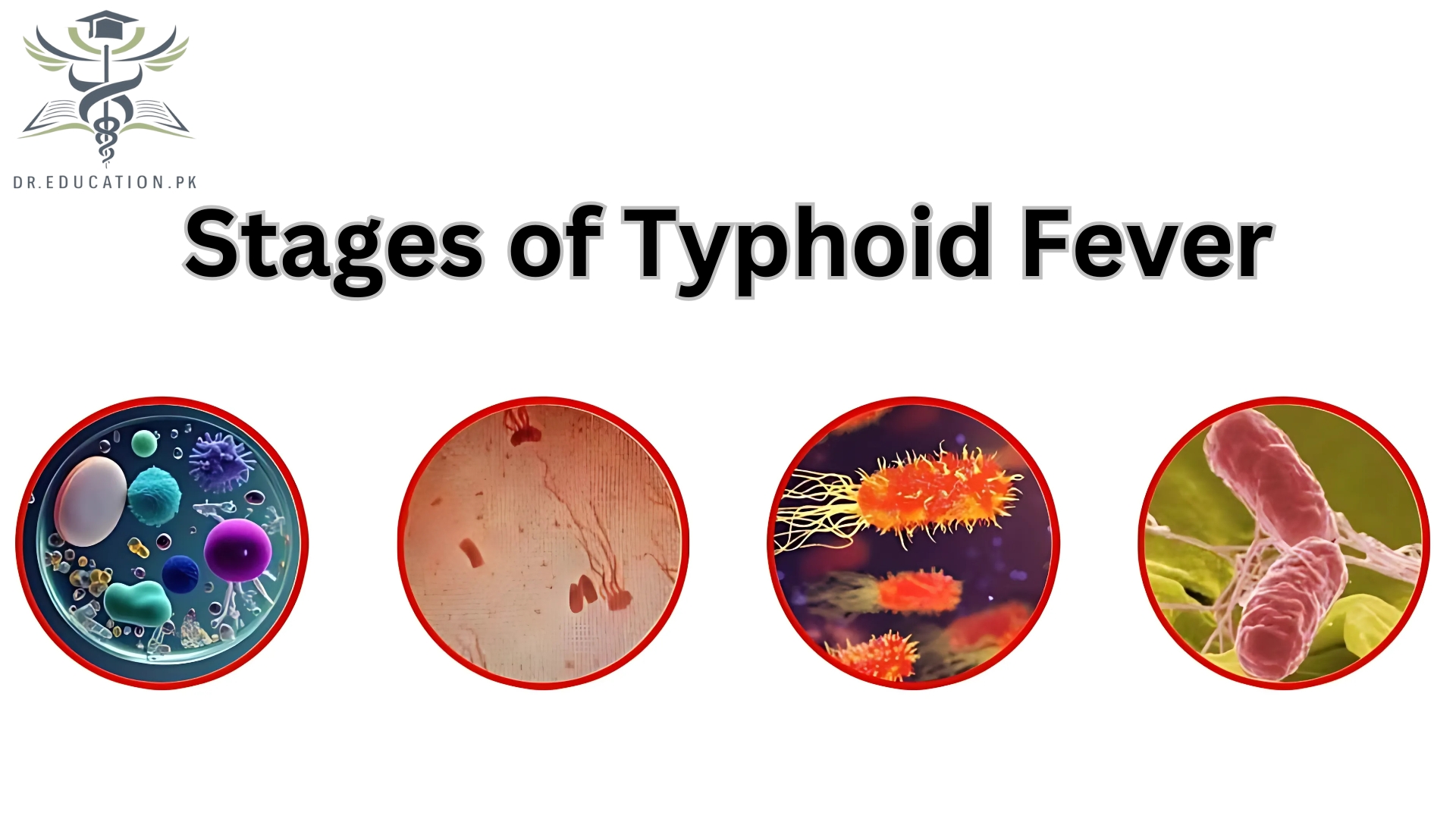
You can develop symptoms of typhoid fever gradually in four stages. Early treatment with antibiotics can keep you from progressing to later stages.
- Stage 1. You can start getting typhoid symptoms anywhere from five to 14 days after coming in contact with S. Typhi. The first symptom is a fever that gets higher over a few days — called “stepwise” since it goes up in steps. The bacteria is moving into your blood in this stage.
- Stage 2. Around the second week of fever, the bacteria is multiplying in your Peyer’s patches (part of your immune system that identifies harmful invaders). You’ll start experiencing abdominal pain and other stomach symptoms, like diarrhea or constipation. You might get “rose spots,” small pink dots on your skin that look like a rash.
- Stage 3. If not treated with antibiotics, the bacteria can cause severe damage, usually around the third week after your symptoms start. Some people get serious complications, like internal bleeding and encephalitis (inflammation in your brain).
- Stage 4. Stage four is when most people begin to recover. Your high fever begins to come down. S. Typhi can live in your gallbladder without causing symptoms, which means you may still be contagious even after you feel better.
Causes of Typhoid Fever
A bacteria strain called Salmonella enterica serotype typhi causes typhoid fever. Other strains of salmonella bacteria cause a similar disease called paratyphoid fever.
People pick up the bacteria most often in places where outbreaks are common. The bacteria passes out of the body in the stool and urine of people who are carrying the bacteria. Without careful hand-washing after going to the bathroom, the bacteria can move from the hands to objects or other people.
The bacteria also can spread from a person who carries the bacteria. It can spread on food that isn’t cooked, such as raw fruits without a peel. In places where water isn’t treated to kill germs, you can pick up the bacteria from that source. This includes drinking water, using ice made from untreated water, or by drinking unpasteurized milk or juice.
Typhoid carriers
Even after antibiotic treatment, a small number of people who recover from typhoid fever still have the bacteria living in their bodies. These people are known as chronic carriers. They no longer have symptoms of the disease. But they still shed the bacteria in their stools and spread it.
Diagnosis and Tests
How is typhoid fever diagnosed?
Your healthcare provider will use your symptoms, your travel history and lab tests to diagnose typhoid fever. They’ll give you a physical exam and listen to your heart and lungs.
It’s very important to tell your provider if you’ve traveled recently or think you’ve been exposed to typhoid, otherwise they might not know to test for it. They’ll also use the information to decide what treatment to give.
What tests can be done to diagnose typhoid fever?
Your healthcare provider will take samples of body fluids or tissue to test for signs of S. Typhi. They might take samples of your:
- Blood. Your provider will use a needle to take a small tube of blood from your arm.
- Poop (stool). Your healthcare provider will give you a sterile container and instructions on how to collect a sample.
- Pee (urine). You may be asked to pee into a cup given to you by your healthcare provider.
- Your provider might numb your skin and take a sample with a small razor or scalpel.
- Bone marrow. Your provider will numb your skin and use a special needle to get a sample of the inside of your bones. It’s rare that you’d ever need this test for diagnosis.
You provider may also take X-rays (pictures of the inside of your body) to look for changes in your lungs.
Treatment
Antibiotic therapy is the only effective treatment for typhoid fever.
Commonly prescribed antibiotics
The medicine you get to treat typhoid fever may depend on where you picked up the bacteria. Strains picked up in different places respond better or worse to certain antibiotics. These medicines may be used alone or together. Antibiotics that may be given for typhoid fever are:
- Fluoroquinolones. These antibiotics, including Ciprofloxacin, may be a first choice. They stop bacteria from copying themselves. But some strains of bacteria can live through treatment. These bacteria are called antibiotic resistant.
- Cephalosporins. This group of antibiotics keeps bacteria from building cell walls. One kind, Ceftriaxone, is used if there is antibiotic resistance.
- Macrolides. This group of antibiotics keeps bacteria from making proteins. One kind called Azithromycin can be used if there is antibiotic resistance.
- Carbapenems. These antibiotics also prevent bacteria from building cell walls. But they focus on a different stage of that process than the Cephalosporins. Antibiotics in this category may be used with severe disease that doesn’t respond to other antibiotics.
Other treatments
Other treatments include:
- Drinking fluids. This helps prevent the dehydration caused by a long fever and diarrhea. If you’re very dehydrated, you may need to receive fluids through a vein.
- Surgery. If the intestines are damaged, you may need surgery to repair them.
Risk factors of Typhoid Fever
Typhoid fever is a serious worldwide threat and affects millions of people each year. Places with the highest number of cases or with regular outbreaks are in Africa and South Asia. But cases are recorded worldwide, often due to travelers to and from these areas.
If you live in a country where typhoid fever is rare, you’re at increased risk if you:
- Work in or travel to areas where typhoid fever is established, especially if you travel to visit family or friends. People visiting loved ones may have higher social pressure to drink or eat foods that present a higher risk.
- Work as a clinical microbiologist handling Salmonella enterica serotype typhi bacteria.
- Have close contact with someone who is infected or has recently been infected with typhoid fever.
Complications of typhoid Fever
If typhoid is left untreated, you’re at risk for severe complications, including:
- Internal bleeding.
- Intestinal perforation (a hole in your intestines).
- Swollen or burst gallbladder.
- Neurological (brain) symptoms, including confusion, delirium and seizures.
- Swelling around your brain (meningitis).
- Bronchitis, pneumonia or other respiratory issues.
- Bone inflammation (osteomyelitis).
- Heart inflammation.
- Kidney failure.
- Miscarriage.
Prevention
People can get a vaccination against typhoid fever. This is an option if you live where typhoid fever is common. It is also an option if you plan to travel to a place where the risk is high.
Where typhoid fever is common, access to treated water helps avoid contact with the Salmonella enterica serotype typhi bacteria. Management of human waste also helps people avoid the bacteria. And careful hand-washing for people who prepare and serve food is also important.
Vaccines
Two vaccines are available in the United States for people age 2 and older.
- One is given as a single shot at least one week before travel.
- One is given orally in four capsules, with one capsule to be taken every other day.
The effectiveness of these vaccines wears off over time. So repeat immunization is needed.
Because the vaccine won’t provide complete protection, follow these guidelines when traveling to high-risk areas:
- Wash your hands. Frequent hand-washing in hot, soapy water is the best way to control infection. Wash before eating or preparing food and after using the toilet. Carry an alcohol-based hand sanitizer for times when soap and water aren’t available.
- Avoid using untreated water. Contaminated drinking water is a problem in areas where typhoid fever is common. For that reason, drink only bottled water or canned or bottled carbonated beverages, wine and beer. Carbonated bottled water is safer than noncarbonated bottled water. Ask for drinks without ice. Use bottled water to brush your teeth, and try not to swallow water in the shower.
- Avoid raw fruits and vegetables. Because raw produce may have been washed in contaminated water, avoid fruits and vegetables that you can’t peel, especially lettuce. To be safe, you may want to avoid raw foods.
- Choose hot foods. Avoid food that’s stored or served at room temperature. Freshly made, steaming hot foods may be less risky than uncooked foods.
- Know where the health care providers are. Find out about medical care in the areas you’ll visit. Carry a list of the names, addresses and phone numbers of health care providers.
Prevent infecting others
If you’re recovering from typhoid fever, these measures can help keep others safe:
- Take your antibiotics. Follow your health care provider’s instructions for taking your antibiotics and be sure to finish the entire prescription.
- Wash your hands often. This is the single most important thing you can do to keep from spreading the infection to others. Use hot, soapy water and scrub thoroughly for at least 30 seconds, especially before eating and after using the toilet.
- Avoid handling food. Avoid preparing food for others until your health care provider says you’re no longer contagious. If you work with food, you may need to take a test to show you aren’t shedding typhoid bacteria. If you work in health care, you also may need to show you aren’t shedding the bacteria.
Signs of Recovery From Typhoid
If you start antibiotics soon after you get sick, you can expect to feel better about a week after starting the right one. Signs that you’re getting better include:
- No fever
- Improved appetite
- Reduced diarrhea
- No body pain
- Improved energy
- No chest congestion
People who don’t get treatment right away may take weeks before they start to feel better. This also puts them at a higher risk of getting complications, which could further extend their recovery time.
Some people get sick again after they recover. This is called a relapse and is usually a milder case than the first time. If it happens, it’s usually about a week after you finish your antibiotics, but it can also happen weeks or months later. In this case, call your doctor because you will likely need more antibiotics.
About 5% of people who have recovered from typhoid fever are carriers. This means that even though you look and feel fine, you can still pass the bacteria in your pee in poop. This can last a year or even longer. Your doctor can test to see if you still carry the S.Typhi bacteria. In some places, you may need to have a negative test before you can go back to work or school.


