
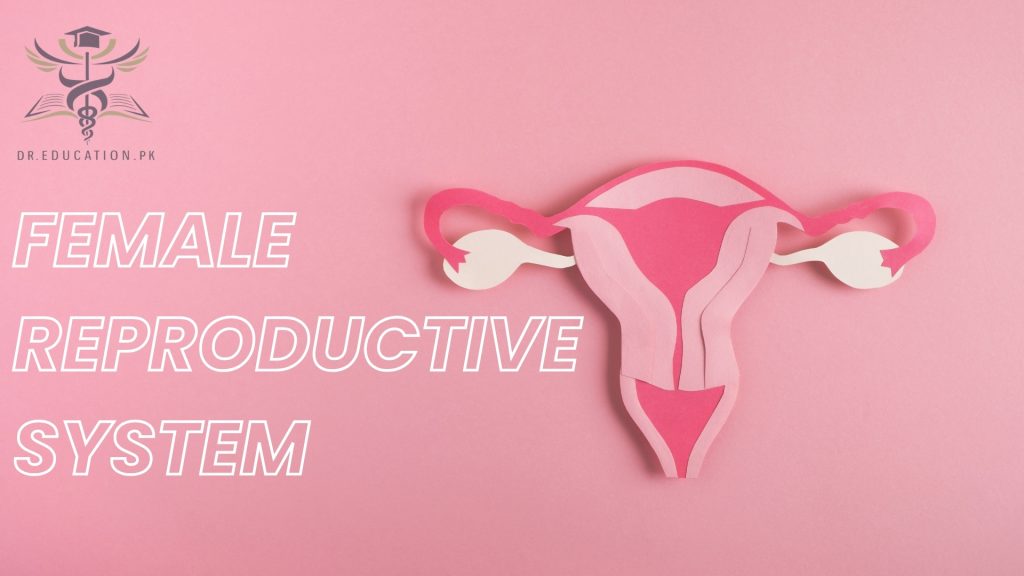
Female Reproductive System
According to Wikipedia,
The human female reproductive system is made up of the internal and external sex organs that function in the reproduction of new offspring. The reproductive system is immature at birth and develops at puberty to be able to release matured ova from the ovaries, facilitate their fertilization, and create a protective environment for the developing fetus during pregnancy. The female reproductive tract is made of several connected internal sex organs—the vagina, uterus, and fallopian tubes—and is prone to infections. The vagina allows for sexual intercourse, and is connected to the uterus at the cervix. The uterus (or womb) accommodates the embryo by developing the uterine lining.
Overview
Female Reproductive System
The female reproductive system is the body parts that help women or people assigned female at birth (AFAB):
- Have sexual intercourse.
- Reproduce.
- Menstruate.
What are the parts of the female reproductive system?
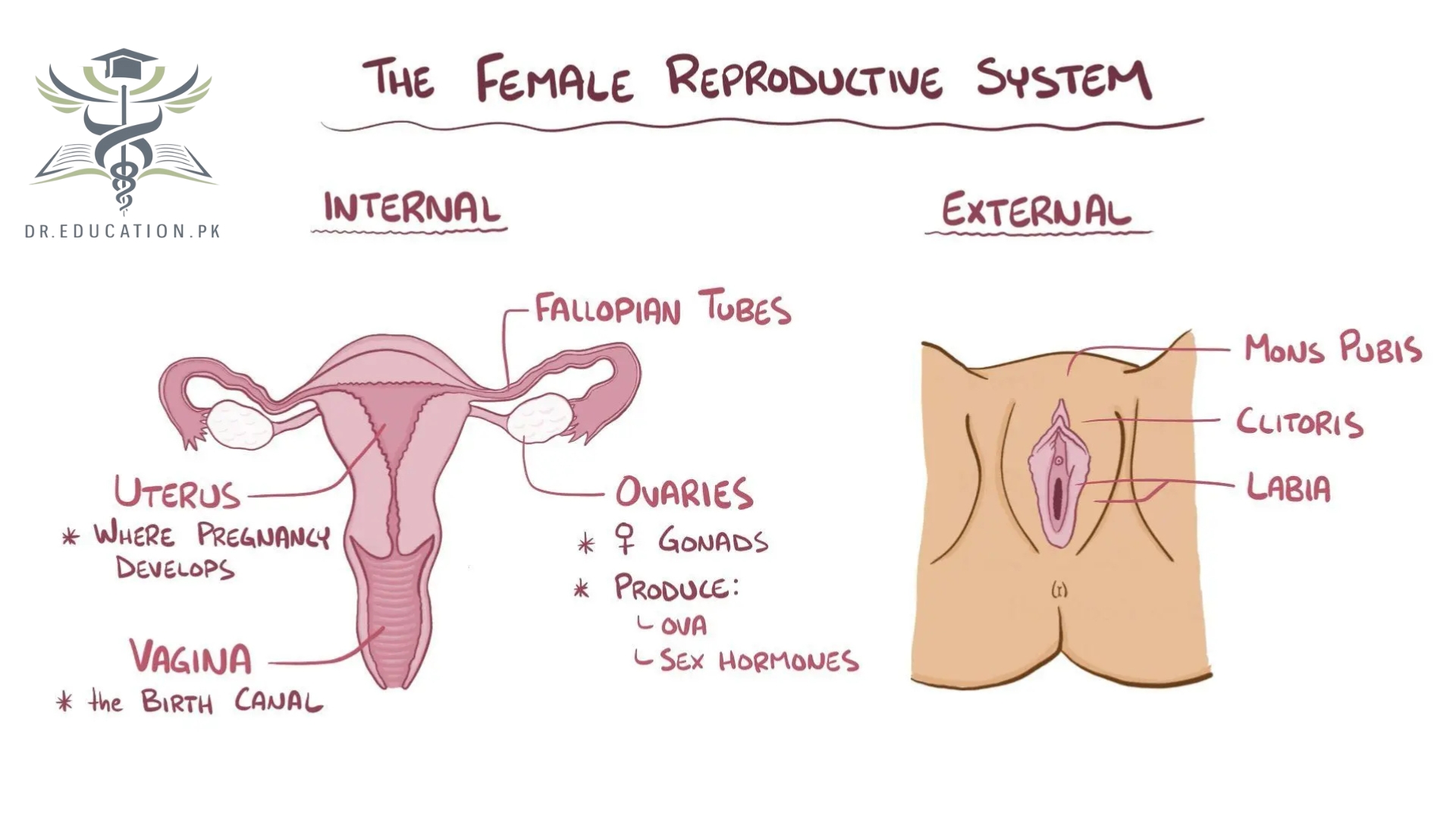
The female reproductive anatomy includes both external and internal parts.
External parts
The function of your external genitals are to protect the internal parts from infection and allow sperm to enter your vagina.
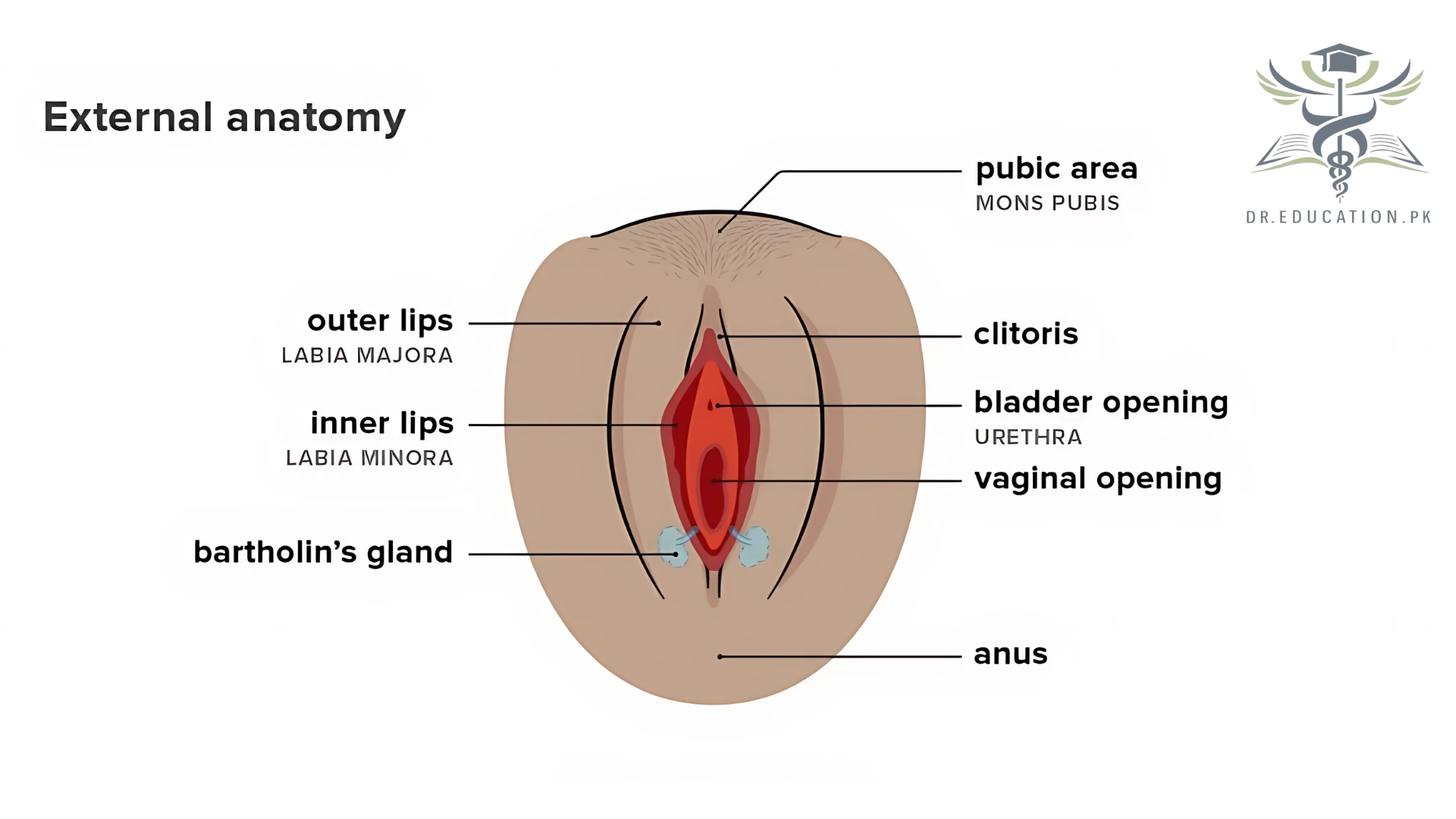
Your vulva is the collective name for all your external genitals. A lot of people mistakenly use the term “vagina” to describe all female reproductive parts. However, your vagina is its own structure located inside your body.
The main parts of your vulva or external genitals are:
- Labia majora: Your labia majora (“large lips”) enclose and protect the other external reproductive organs. During puberty, hair growth occurs on the skin of the labia majora, which also contain sweat and oil-secreting glands.
- Labia minora: Your labia minora (“small lips”) can have a variety of sizes and shapes. They lie just inside your labia majora, and surround the opening to your vagina (the canal that joins the lower part of your uterus to the outside of your body) and urethra (the tube that carries pee from your bladder to the outside of your body). This skin is very delicate and can become easily irritated and swollen.
- Clitoris: Your two labia minora meet at your clitoris, a small, sensitive protrusion that’s comparable to a penis in men or people assigned male at birth (AMAB). Your clitoris is covered by a fold of skin called the prepuce and is very sensitive to stimulation.
- Vaginal opening: Your vaginal opening allows menstrual blood and babies to exit your body. Tampons, fingers, sex toys or penises can go inside your vagina through your vaginal opening.
- Hymen: Your hymen is a piece of tissue covering or surrounding part of your vaginal opening. It’s formed during development and present during birth.
- Opening to your urethra: The opening to your urethra is the hole you pee from.
Internal parts
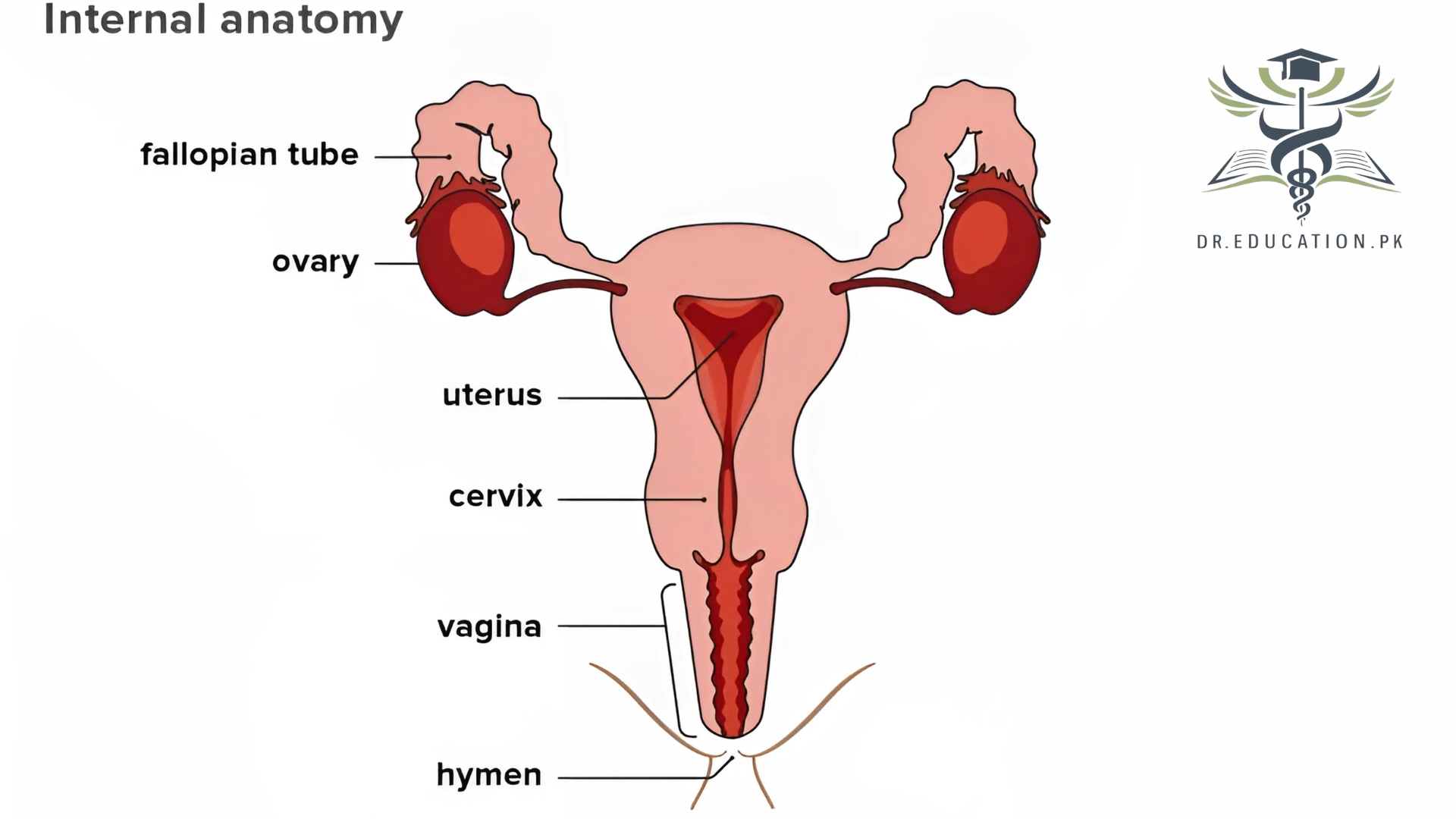
- Vagina: Your vagina is a muscular canal that joins the cervix (the lower part of uterus) to the outside of the body. It can widen to accommodate a baby during delivery and then shrink back to hold something narrow like a tampon. It’s lined with mucous membranes that help keep it moist.
- Cervix: Your cervix is the lowest part of your uterus. A hole in the middle allows sperm to enter and menstrual blood to exit. Your cervix opens (dilates) to allow a baby to come out during a vaginal childbirth. Your cervix is what prevents things like tampons from getting lost inside your body.
- Uterus: Your uterus is a hollow, pear-shaped organ that holds a fetus during pregnancy. Your uterus is divided into two parts: the cervix and the corpus. Your corpus is the larger part of your uterus that expands during pregnancy.
- Ovaries: Ovaries are small, oval-shaped glands that are located on either side of your uterus. Your ovaries produce eggs and hormones.
- Fallopian tubes: These are narrow tubes that are attached to the upper part of your uterus and serve as pathways for your egg (ovum) to travel from your ovaries to your uterus. Fertilization of an egg by sperm normally occurs in the fallopian tubes. The fertilized egg then moves to the uterus, where it implants into your uterine lining.
What are the functions of the female reproductive system?
The female reproductive system provides several functions. In addition to allowing a person to have sexual intercourse, it also helps a person reproduce.
Your ovaries produce eggs. These eggs are then transported to your fallopian tube during ovulation where fertilization by a sperm may occur. The fertilized egg then moves to your uterus, where the uterine lining has thickened in response to the normal hormones of your menstrual cycle (also called your reproductive cycle). Once in your uterus, the fertilized egg can implant into the thickened uterine lining and continue to develop. If implantation doesn’t take place, the uterine lining is shed as your menstrual period. In addition, the female reproductive system produces sex hormones that maintain your menstrual cycle.
During menopause, the female reproductive system gradually stops making the female hormones necessary for the menstrual cycle to work. At this point, menstrual cycles can become irregular and eventually stop. You’re considered to be menopausal when you’ve gone an entire year without a menstrual period.
What Happens During the Menstrual Cycle?
Females of reproductive age experience cycles of hormonal activity that repeat at about one-month intervals. With every cycle, a woman’s body prepares for a potential pregnancy, whether or not that is the woman’s intention. The term menstruation refers to the periodic shedding of the uterine lining. (Menstru means “monthly.”)
The average menstrual cycle takes about 28 days and occurs in phases: the follicular phase, the ovulatory phase (ovulation), and the luteal phase.
There are four major hormones (chemicals that stimulate or regulate the activity of cells or organs) involved in the menstrual cycle: follicle-stimulating hormone, luteinizing hormone, estrogen, and progesterone.
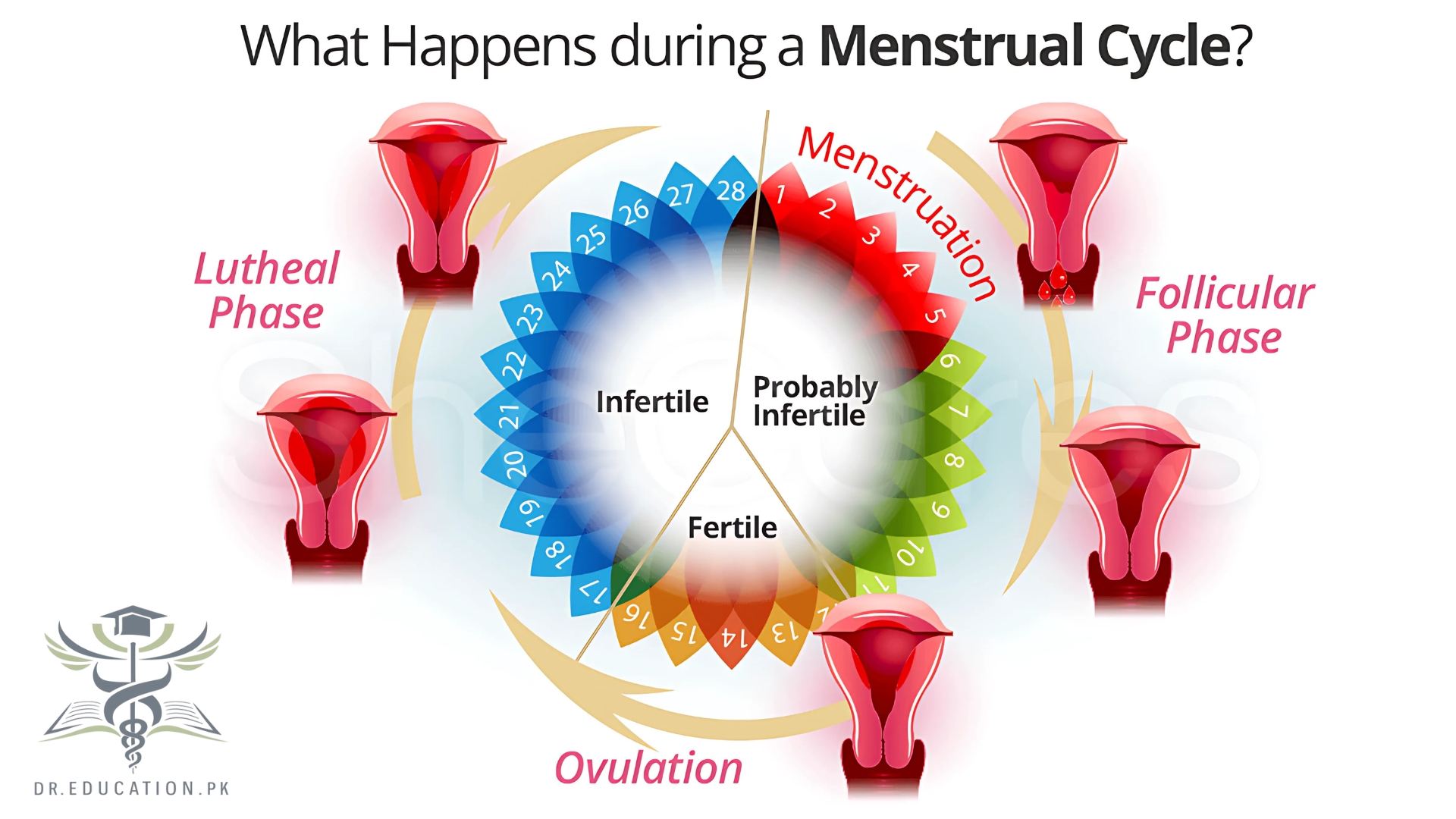
Follicular phase
This phase starts on the first day of your period. During the follicular phase of the menstrual cycle, the following events occur:
- Two hormones, follicle stimulating hormone (FSH) and luteinizing hormone (LH) are released from your brain and travel in your blood to your ovaries.
- The hormones stimulate the growth of about 15 to 20 eggs in your ovaries, each in its own “shell,” called a follicle.
- These hormones (FSH and LH) also trigger an increase in the production of the hormone estrogen.
- As estrogen levels rise, like a switch, it turns off the production of follicle-stimulating hormone. This careful balance of hormones allows the body to limit the number of follicles that will prepare eggs to be released.
- As the follicular phase progresses, one follicle in one ovary becomes dominant and continues to mature. This dominant follicle suppresses all of the other follicles in the group. As a result, they stop growing and die. The dominant follicle continues to produce estrogen.
Ovulatory Phase
The ovulatory phase, or ovulation, starts about 14 days after the follicular phase started. The ovulatory phase is the midpoint of the menstrual cycle, with the next menstrual period starting about two weeks later. During this phase, the following events occur:
- The rise in estrogen from the dominant follicle triggers a surge in the amount of luteinizing hormone that is produced by the brain.
- This causes the dominant follicle to release its egg from the ovary.
- As the egg is released (a process called ovulation), it is captured by finger-like projections on the end of the fallopian tubes (fimbriae). The fimbriae sweep the egg into the tube.
- Also during this phase, there is an increase in the amount and thickness of mucus produced by the cervix (lower part of the uterus). If a woman were to have intercourse during this time, the thick mucus captures the man’s sperm, nourishes it, and helps it to move towards the egg for fertilization.
Luteal phase
The luteal phase begins right after ovulation and involves the following processes:
- Once it releases its egg, the empty ovarian follicle develops into a new structure called the corpus luteum.
- The corpus luteum secretes the hormones estrogen and progesterone. Progesterone prepares your uterus for a fertilized egg to implant.
- If intercourse has taken place and sperm has fertilized the egg (conception), the fertilized egg (embryo) will travel through your fallopian tube to implant in your uterus. This is how pregnancy begins.
- If the egg isn’t fertilized, it dissolves in your uterus. Not needed to support a pregnancy, the lining of your uterus breaks down and sheds. This is when your period begins.
How Many Eggs Does a Woman Have?
The vast majority of the eggs within the ovaries steadily die, until they are depleted at menopause. At birth, there are approximately 1 million to 2 million eggs; by the time of puberty, only about 300,000 remain. Of these, only about 500 will be ovulated during a woman’s reproductive lifetime. Any remaining eggs gradually die out at menopause.
How does reproduction work?
In humans, female and male reproductive systems work together to reproduce. There are two kinds of sex cells — sperm and eggs. When a sperm meets an egg, it can fertilize it and create a zygote. This zygote eventually becomes a fetus. Both a sperm and an egg are needed for human reproduction.
Conclusion from Dreducation.pk
In conclusion, the female reproductive system plays a vital role in human reproduction and overall reproductive health. Comprising both external and internal organs, it is responsible for processes like menstruation, ovulation, and pregnancy. Each organ within the system has a unique function—from the ovaries, which produce eggs and hormones, to the uterus, which provides a nurturing environment for fetal development. The menstrual cycle, governed by a complex interplay of hormones, prepares the body monthly for the potential of pregnancy. Understanding the female reproductive system’s anatomy and functions can empower individuals to make informed health decisions, support fertility, and manage reproductive health throughout life.


