
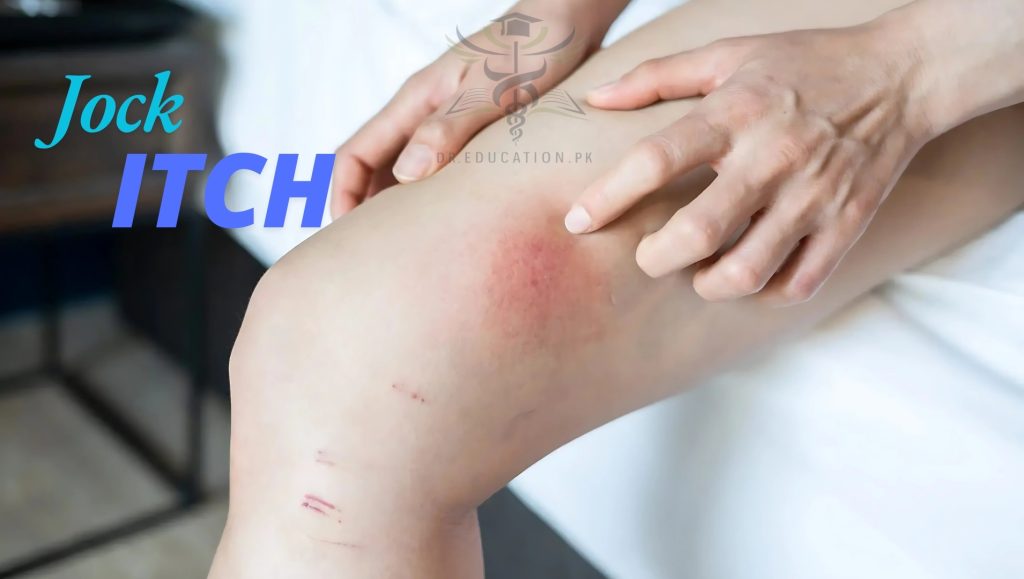
Jock Itch (Tinea Cruris)
According to Wikipedia,
Tinea Cruris (TC), also known as jock itch, is a common type of contagious, superficial fungal infection of the groin and buttocks region, which occurs predominantly but not exclusively in men and in hot-humid climates.
Overview
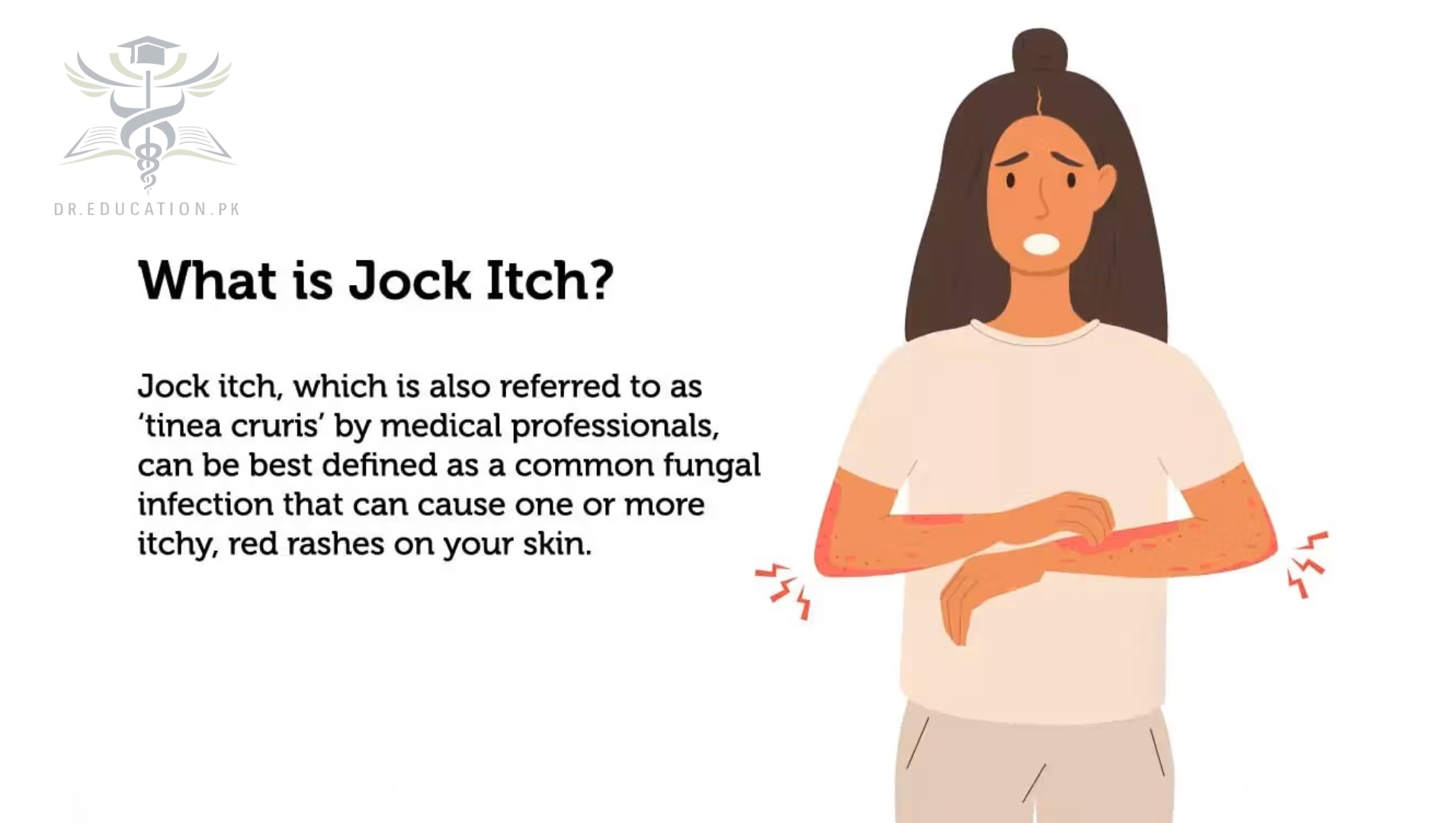
What is jock itch?
Jock itch is a common fungal (caused by a fungus) infection similar to ringworm. Jock itch causes an itchy, stinging, burning rash on the skin around your groin, inner thighs and butt crack (gluteal cleft). Tinea cruris is another name for jock itch. Tinea is another name for ringworm, and cruris means groin.
With this infection, your skin may become scaly and cracked or develop bumps or blisters.
What does jock itch look like?
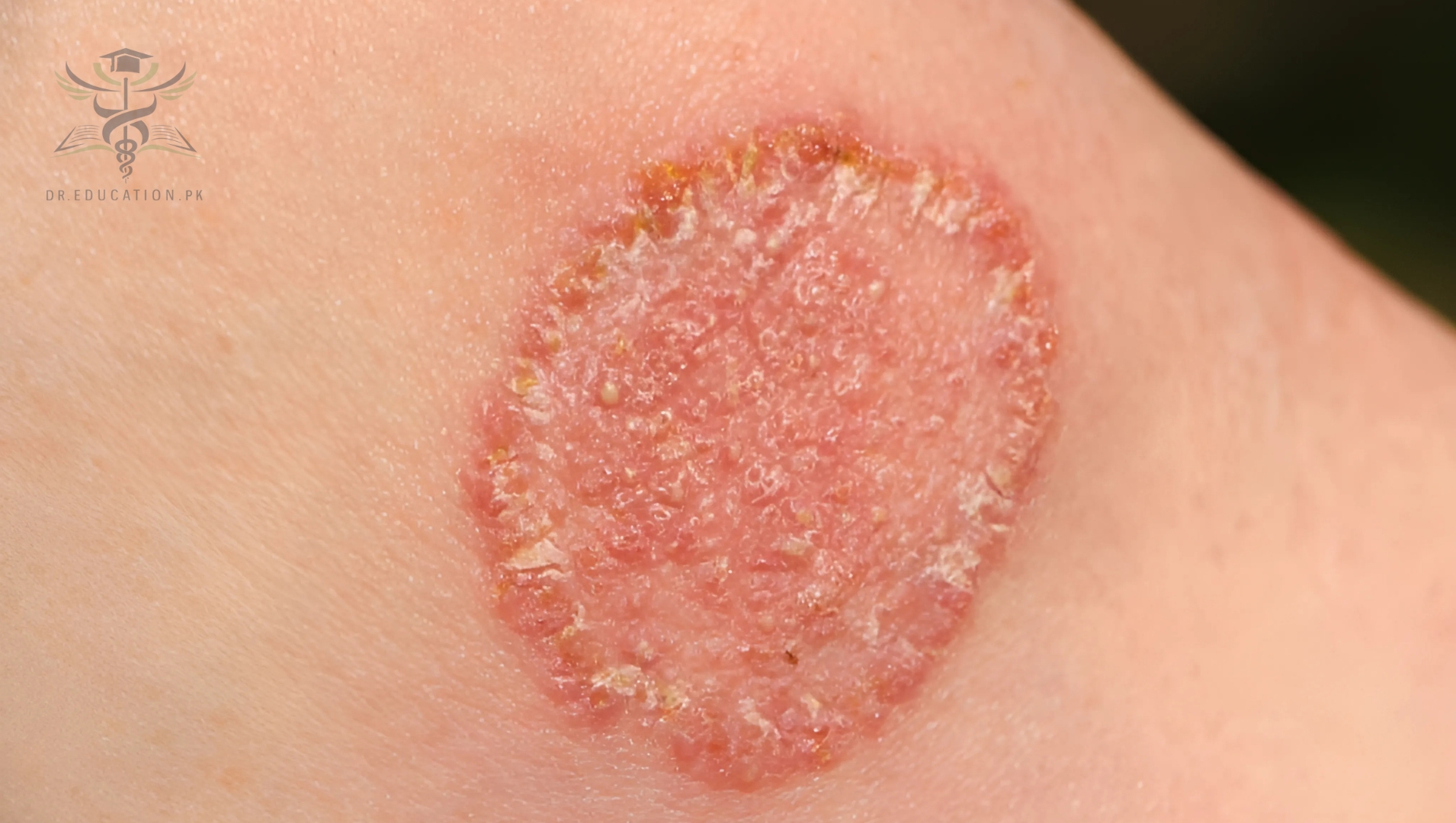
Jock itch usually infects your skin in the creases of your groin, over your inner thighs, and in your butt crack. Depending on your natural skin tone, your rash may look red, brown, purple, gray, tan, or white.
Your skin will likely look scaly or flaky and you may also have small bumps or blisters. Your rash may also look like a ring, with a clear center.
Who does jock itch affect?
Jock itch affects everyone. However, adolescent and young adult men get jock itch most often. It’s uncommon in women. Men are three times more likely to get jock itch than women. It’s rare in children.
You may be more likely to develop jock itch if you have:
- Diabetes.
- Obesity.
- A weakened immune system.
Symptoms
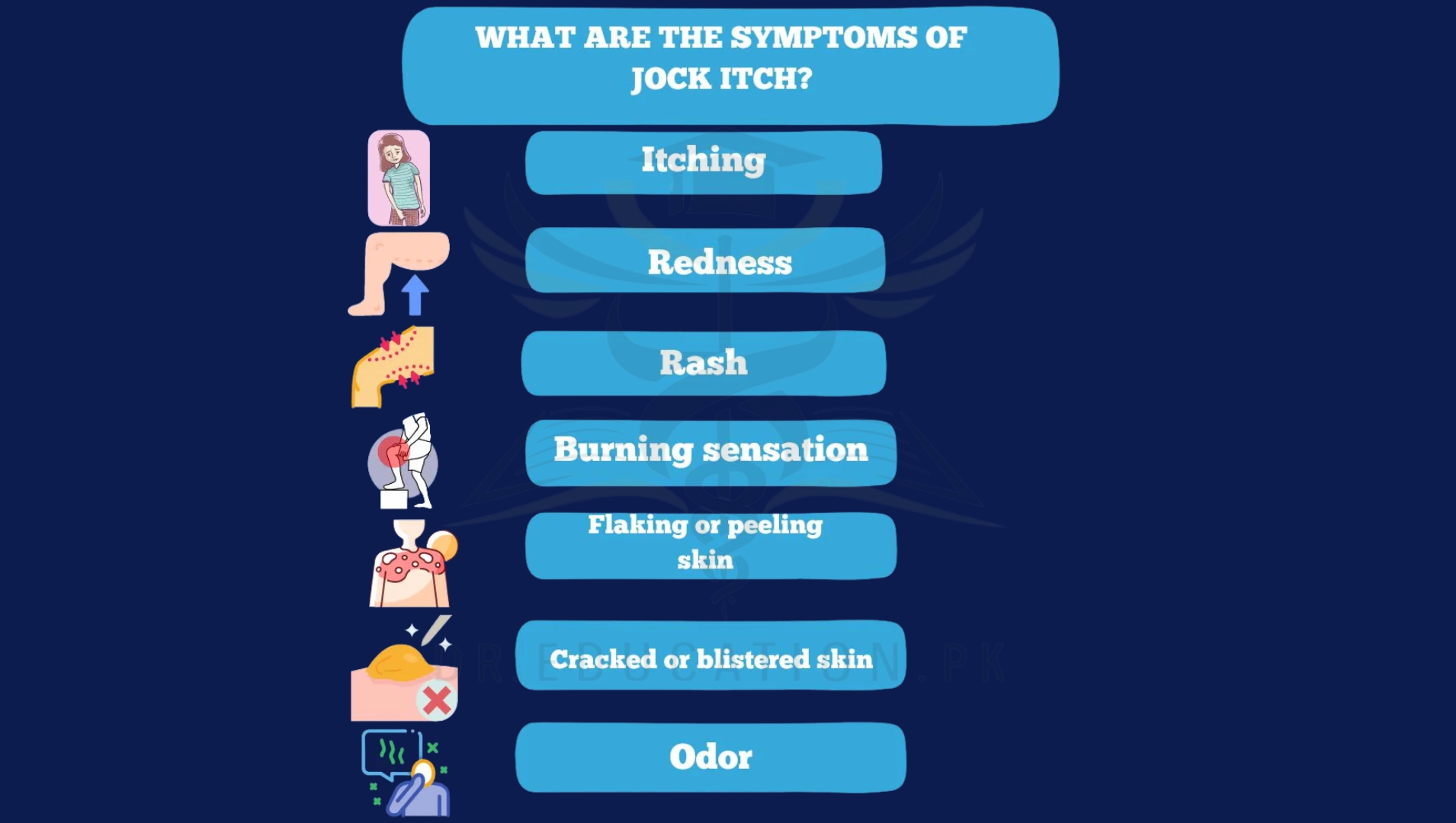
Symptoms of jock itch are:
- A spreading rash that begins in the crease of the groin and moves down the upper thigh and buttocks.
- A rash whose center tends to clear as the rash spreads.
- A rash that may be full or partially ring shaped.
- A rash bordered with small blisters.
- Itchiness.
- Scaly skin.
- A rash that might be red, brown, purple or gray depending on your skin color.
- Odor
Does jock itch smell?
Yes, jock itch can have a distinctive smell. The dermatophytes that cause your infection can cause a musty, moldy, or yeast-like smell. It may also smell sour. If you have a severe case of jock itch, the smell can be foul.
Can women get jock itch?
Yes, people who are assigned female at birth (AFAB) and women can get jock itch. It’s rarer in people AFAB than in people who are AMAB.
Causes
Jock itch, medically known as tinea cruris, is a fungal infection that affects the skin in warm, moist areas like the groin. It usually starts when a type of fungus, the same one that can cause athlete’s foot or ringworm, grows too much on the skin. Several things can increase the risk of jock itch:
- Sweat and Moisture: When sweat and moisture build up, especially in the groin area, it creates a perfect environment for fungi to grow.
- Tight or Synthetic Clothing: Tight clothes or non-breathable fabrics can trap heat and sweat, making it easier for the fungus to thrive.
- Poor Hygiene: Not showering regularly or not changing clothes daily can lead to a buildup of fungi on the skin.
- Direct Contact or Shared Items: Jock itch can spread through skin-to-skin contact or shared towels, clothes, or gym equipment with someone who has the infection.
- Weak Immune System: A weaker immune system can make it harder for the body to keep fungal infections under control.
- Cross-Contamination from Athlete’s Foot: If someone has athlete’s foot and touches that area first, they might spread the fungus to their groin area.
Is jock itch contagious?
Jock itch is contagious. Jock itch is a fungus that grows on or in your skin. Fungi (plural form of fungus) need warm temperatures and moisture to grow. Tight underwear or pants trap heat and moisture around your groin. Heat and moisture create the perfect environment for jock itch to grow.
Risk Factors
You may be more likely to get jock itch if you:
- Wear tight clothes that irritate your skin and trap heat and moisture around your groin and legs.
- Sweat a lot around your groin.
- Wear a wet bathing suit for a long time.
- Share damp towels or sweaty clothing with other people.
- Use the same towel to dry infected skin and uninfected skin.
- Have close contact with someone who has jock itch.
- Have obesity or overweight .
- Have a weakened immune system or diabetes.
Diagnosis & Treatment
Diagnosis
Your doctor can usually diagnose jock itch by looking at your skin rash and hearing about your symptoms.
To confirm the diagnosis, your doctor may remove a small sample of skin (biopsy) and test it in the lab. The technician can add drops of potassium hydroxide to the skin cells to dissolve them. This will leave only fungal cells that they can see under the microscope. Or, they may stain your sample with a solution called the periodic acid-Schiff (PAS) stain that makes the fungi visible.
How is jock itch treated?
Over-the-counter (OTC) and prescription antifungal creams, ointments, gels, sprays or powders effectively treat jock itch. These products contain clotrimazole, miconazole, tolnaftate or terbinafine.
Some prescription antifungal medications are pills. These pills contain fluconazole, itraconazole or terbinafine.
It’s important to finish your full course of medicine. If you stop too soon, your jock itch may come back and be harder to treat.
Prevention
Tips for reducing the risk of jock itch include:
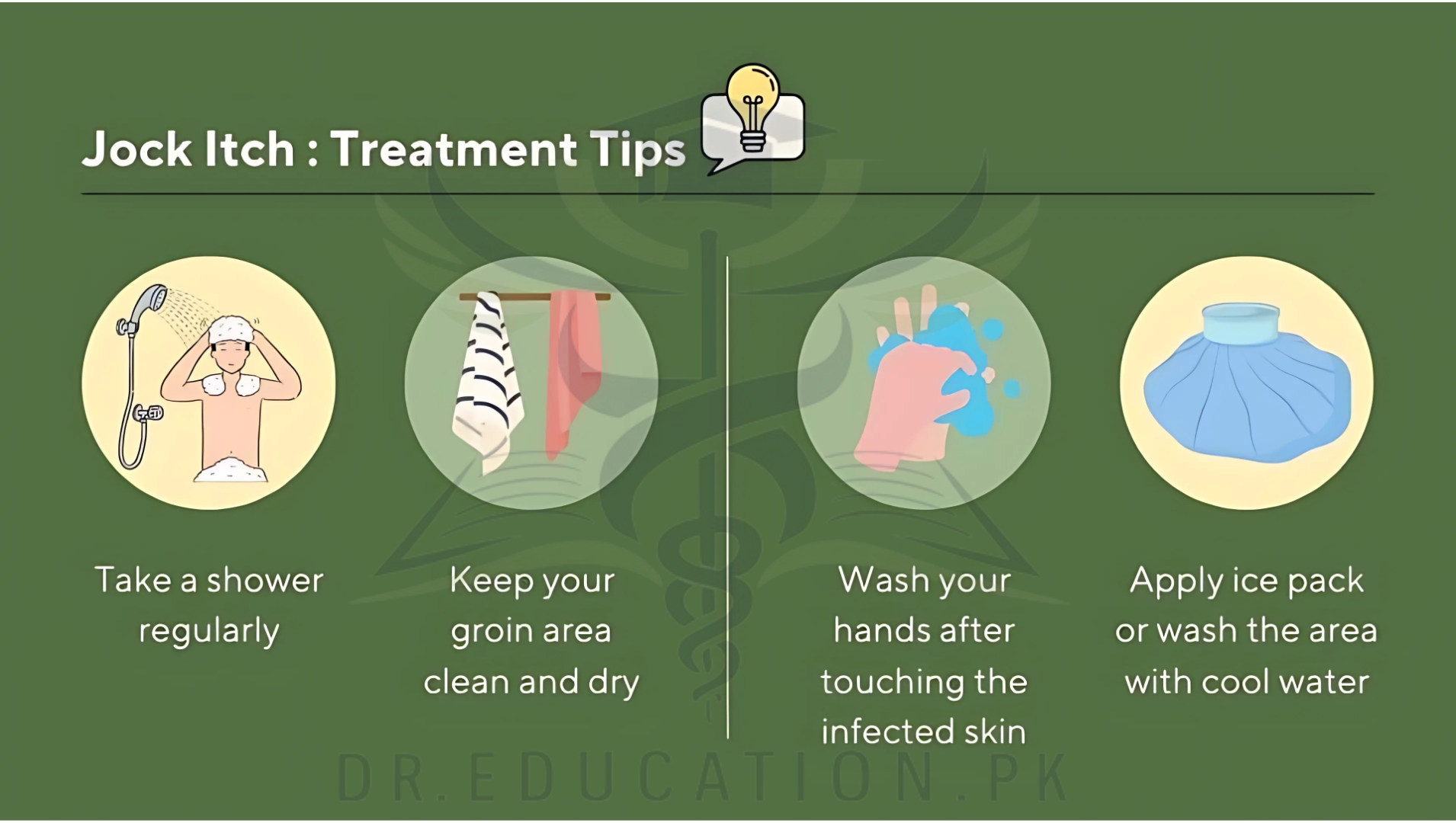
- Stay dry. Keep the groin area and inner thighs dry by drying with a clean towel after showering or exercising. Dry your feet last to avoid spreading athlete’s foot to the groin area.
- Wear clean clothes. Change your underwear at least once a day or more often if you sweat a lot. It helps to wear underwear made of cotton or other fabric that breathes and keeps the skin drier. Wash workout clothes after each use.
- Find the correct fit. Choose underwear, athletic supporters and sports uniforms that fit well. Tight-fitting clothes can chafe your skin and up the risk of jock itch. Try wearing boxer shorts rather than briefs.
- Don’t share personal items. Don’t let others use your clothing, towels or other personal items. Don’t borrow such items from others.
- Treat or prevent athlete’s foot. Control athlete’s foot to prevent its spread to the groin. Prevent athlete’s foot by wearing waterproof footwear around public pools and in showers and locker rooms.
Home Remedies
Here are some simple, natural ways to help ease and treat jock itch right at home:
- Keep It Clean and Dry: Gently wash the area with soap and water once or twice a day, making sure to dry it thoroughly. Fungi thrive in moist areas, so keeping the skin dry can help stop the infection from spreading.
- Apple Cider Vinegar: This common kitchen ingredient has antifungal properties. Mix equal parts of apple cider vinegar and water, dip a clean cloth into it, and dab it on the itchy area. It helps fight the infection and relieves some of the discomfort.
- Coconut Oil: Coconut oil contains natural fatty acids that have mild antifungal effects. A thin layer on the skin can help soothe irritation while providing a barrier against the infection.
- Tea Tree Oil: Known for its natural antifungal and antiseptic qualities, tea tree oil can be a strong ally against jock itch. Dilute a few drops with coconut oil and apply it twice daily. It’s strong, so try a small patch of skin first to check for irritation.
- Aloe Vera Gel: This natural gel is cooling and gentle on irritated skin. Applying pure aloe vera gel provides relief from itching and can help reduce redness.
- Garlic Paste: Fresh garlic has antifungal properties. Crush a clove and mix it with a little coconut oil to make a paste. Apply it for 10-15 minutes, then rinse off. It can sting a bit, so only use it if the skin isn’t too sensitive.
- Oatmeal or Baking Soda Bath: Adding a bit of oatmeal or baking soda to a warm bath can calm the itching and dryness. Soak in it for 15-20 minutes, then gently pat the skin dry.
- Saltwater Solution: A mild saltwater rinse can help dry out the area and provide some relief. Dissolve a teaspoon of salt in a cup of warm water, dab it on with a clean cloth, and then let it air dry.
These remedies are easy to try and often help manage symptoms. If the jock itch doesn’t improve after a few days, or if it gets worse, it’s best to check in with a healthcare provider for additional advice.
Is it OK to scratch jock itch?
No, it’s not a good idea to scratch the area. If you do, you can spread the infection to other areas of your body. Also, scratching can cause tears in your skin, which could lead to fungus and bacteria getting into your bloodstream. This can cause another infection on top of the jock itch.
Try applying a cold compress to help ease your itching without spreading it around. Make sure you put a clean towel over the area every time before you apply your compress.
Is jock itch a form of sexually transmitted infection (STI)?
No, CDC doesn’t consider jock itch a form of an STI. But it can spread from skin-to-skin contact, so you can get it from sexual contact or other close contact with an infected person. But you don’t have to have sex with someone to get it.
Conclusion from Dreducation.pk
Jock itch, or tinea cruris, is a common fungal infection affecting the groin and thigh area. It often presents as an itchy, sometimes painful rash that can spread if untreated. While anyone can contract jock itch, it’s more common in men and those living in warm, humid climates. Understanding the risk factors and symptoms can help in managing this condition effectively.
For treatment, over-the-counter antifungal creams and home remedies such as tea tree oil, apple cider vinegar, and proper hygiene can help ease symptoms. Prevention is key: keep the groin area clean and dry, avoid tight clothing, and avoid sharing personal items. With proper care, jock itch is usually manageable, but severe or persistent cases may require medical attention.


