
How to Pronounce Arrhythmia?
Arrhythmia is pronounced as (uh-RITH-me-uh).
What is Arrhythmia (Irregular heartbeat)?
An arrhythmia, or irregular heartbeat, is a problem with the rate or rhythm of your heartbeat. Your heart may beat too quickly, too slowly, or with an irregular rhythm.
It is normal for your heart rate to speed up during physical activity and to slow down while resting or sleeping. It is also normal to feel as if your heart skips a beat occasionally. But a frequent irregular rhythm may mean that your heart is not pumping enough blood to your body. You may feel dizzy, faint, or have other symptoms.

Overview
The term “arrhythmia” refers to any problem in the rate or rhythm of a person’s heartbeat. During an arrhythmia, the electrical impulses may be too fast, too slow or erratic, causing an irregular heartbeat.
When the heart doesn’t beat properly, it can’t pump blood effectively. When this happens, the lungs, brain and all other organs can’t work properly and may shut down or be damaged.
Types of Arrhythmias
Arrhythmias are classified based on the heart rate, the origin of the abnormal rhythm, and how they affect the heart’s function. Here are the main types of arrhythmias:
1. Tachycardia (Fast Heart Rate)
- Sinus Tachycardia: The heart beats faster than normal, but the rhythm is regular. It can be due to exercise, fever, anxiety, or other physiological causes.
- Supraventricular Tachycardia (SVT): An abnormally fast heart rate originating from the atria or the AV node. It includes several subtypes:
- Atrial Tachycardia: Abnormal electrical signals from the atria cause the heart to beat faster.
- Atrioventricular Nodal Reentrant Tachycardia (AVNRT): A re-entry circuit in or near the AV node leads to a fast heart rate.
- Wolff-Parkinson-White Syndrome (WPW): A congenital condition with an extra electrical pathway in the heart, causing rapid heartbeats.
- Atrial Fibrillation (AFib): Rapid, irregular heartbeats originating from the atria. It’s the most common serious arrhythmia and can increase the risk of stroke.
- Atrial Flutter: Similar to AFib, but the heart beats in a regular pattern instead of irregularly.
- Ventricular Tachycardia (VT): Fast heart rate originating from the ventricles. This is a dangerous arrhythmia that can lead to ventricular fibrillation and sudden cardiac death.
- Ventricular Fibrillation (VFib): Chaotic electrical activity in the ventricles causes the heart to quiver instead of pump blood. VFib is a medical emergency that can lead to sudden cardiac arrest.
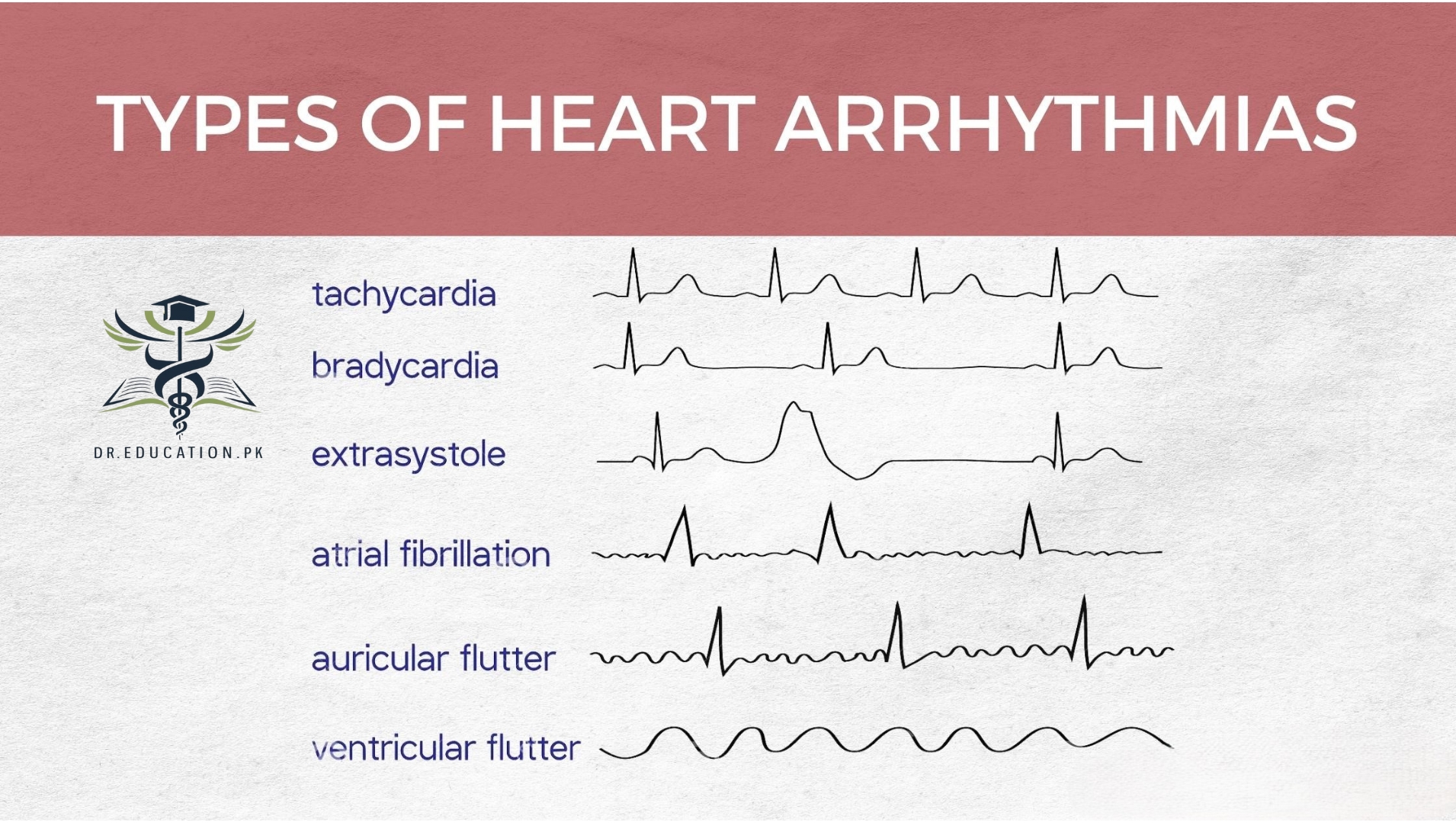
2. Bradycardia (Slow Heart Rate)
- Sinus Bradycardia: A slow heart rate, but with a regular rhythm. It may occur in healthy individuals, such as athletes, but can also result from aging, hypothyroidism, or medication.
- Sick Sinus Syndrome: The sinus node (the heart’s natural pacemaker) doesn’t work properly, leading to periods of slow heart rate or alternating between slow and fast rhythms.
- Heart Block: The electrical signals from the atria to the ventricles are delayed or blocked.
- First-degree heart block: The electrical signals are slower than normal but still reach the ventricles.
- Second-degree heart block: Some signals don’t reach the ventricles, causing skipped heartbeats.
- Third-degree (complete) heart block: No signals reach the ventricles, causing the heart to beat very slowly. A pacemaker may be required in this case.
3. Premature Heartbeats
- Premature Atrial Contractions (PACs): Extra heartbeats that originate in the atria. They are usually harmless and may feel like a skipped beat or flutter.
- Premature Ventricular Contractions (PVCs): Extra heartbeats that originate in the ventricles. These can be benign but may indicate an underlying heart condition if frequent.
4. Other Types
- Long QT Syndrome: A condition that affects the heart’s electrical activity, leading to fast and chaotic heartbeats that may trigger fainting or sudden death.
- Torsades de Pointes: A specific type of ventricular tachycardia that can be life-threatening, often associated with Long QT Syndrome.
- Junctional Rhythm: A slow heart rhythm originating from the AV node rather than the sinus node, usually due to damage or disease affecting the sinus node.
Each type of arrhythmia has different causes, risk factors, and treatment approaches, ranging from lifestyle changes to medical interventions like medications, ablation, or the use of pacemakers and defibrillators. It’s important for individuals to consult a healthcare provider to properly diagnose and manage their specific type of arrhythmia.
To understand how the heart pumps,
learn about: Structure of the heart.

Electrical system of the heart
Electrical signals control the pump
The heartbeat (contraction) begins when an electrical impulse from the sinus node (also called SA node) moves through the heart’s muscle tissue. The SA node is sometimes called the heart’s “natural pacemaker” because it starts the impulses for the heartbeat.
The normal electrical sequence begins in the right atrium and spreads throughout the atria to the atrioventricular (AV) node. Electrical impulses travel down the bundle of His from the AV node and through the Purkinje fibers, causing the ventricles to contract.
The normal heart beats in a regular manner because electrical impulses cause a sequence of organized contractions. In an adult, a normal heart beats 60 to 100 times a minute.
Electrocardiography (ECG or EKG) is a simple, painless test that records the heart’s electrical activity and can help detect arrhythmias (abnormal heart rhythms).
Abnormal heart rhythms (arrhythmias)
Arrhythmias are abnormal heartbeats. The term “arrhythmia” refers to any change from the normal sequence of electrical impulses.
Some arrhythmias are so brief (such as a temporary pause or premature beat) that the overall heart rate or rhythm isn’t greatly affected. But if arrhythmias last longer, they may make the heart rate too slow, too fast or erratic, so the heart pumps less effectively.
- A fast heart rate (in adults, more than 100 beats per minute) is called tachycardia.
- A slow heart rate (less than 60 beats per minute) is called bradycardia.
Causes
Normally, the heart’s most rapidly firing cells are in the sinus node, making that area a natural pacemaker. Under some conditions, almost all heart tissue can start an impulse of the type that can generate a heartbeat.
- Cells in the heart’s conduction system can fire automatically and start electrical activity. This activity can interrupt the normal order of the heart’s pumping activity.
- Secondary pacemakers elsewhere in the heart provide a “backup” rhythm when the sinus node doesn’t work properly or when impulses are blocked somewhere in the conduction system.
Arrhythmias can be caused by:
- A delay or blockage of the electrical signals that control the heartbeat
- Another part of the heart taking over as pacemaker
- Changes to heart tissue caused by changes in blood flow, damage to the heart’s electrical system or stiffening or scarring of the heart tissue
- Excessive exertion, strain or stress
- An imbalance of fluids, hormones or electrolytes in the blood
- Certain heart medications
An arrhythmia occurs when:
- The heart’s natural pacemaker develops an abnormal rate or rhythm.
- The normal conduction pathway is interrupted or changed.
- Another part of the heart takes over as a pacemaker.
Symptoms
An arrhythmia may not cause any obvious symptoms. You may notice symptoms such as a slow or irregular heartbeat or notice pauses between heartbeats. You may also feel like your heart is skipping a beat, fluttering, pounding, or beating too hard or too fast. These are called heart palpitations.
Other symptoms of arrhythmias include:
- Anxiety
- Chest pain or discomfort
- Confusion
- Difficulty breathing, or gasping during sleep
- Dizziness and fainting
- Tiredness or weakness
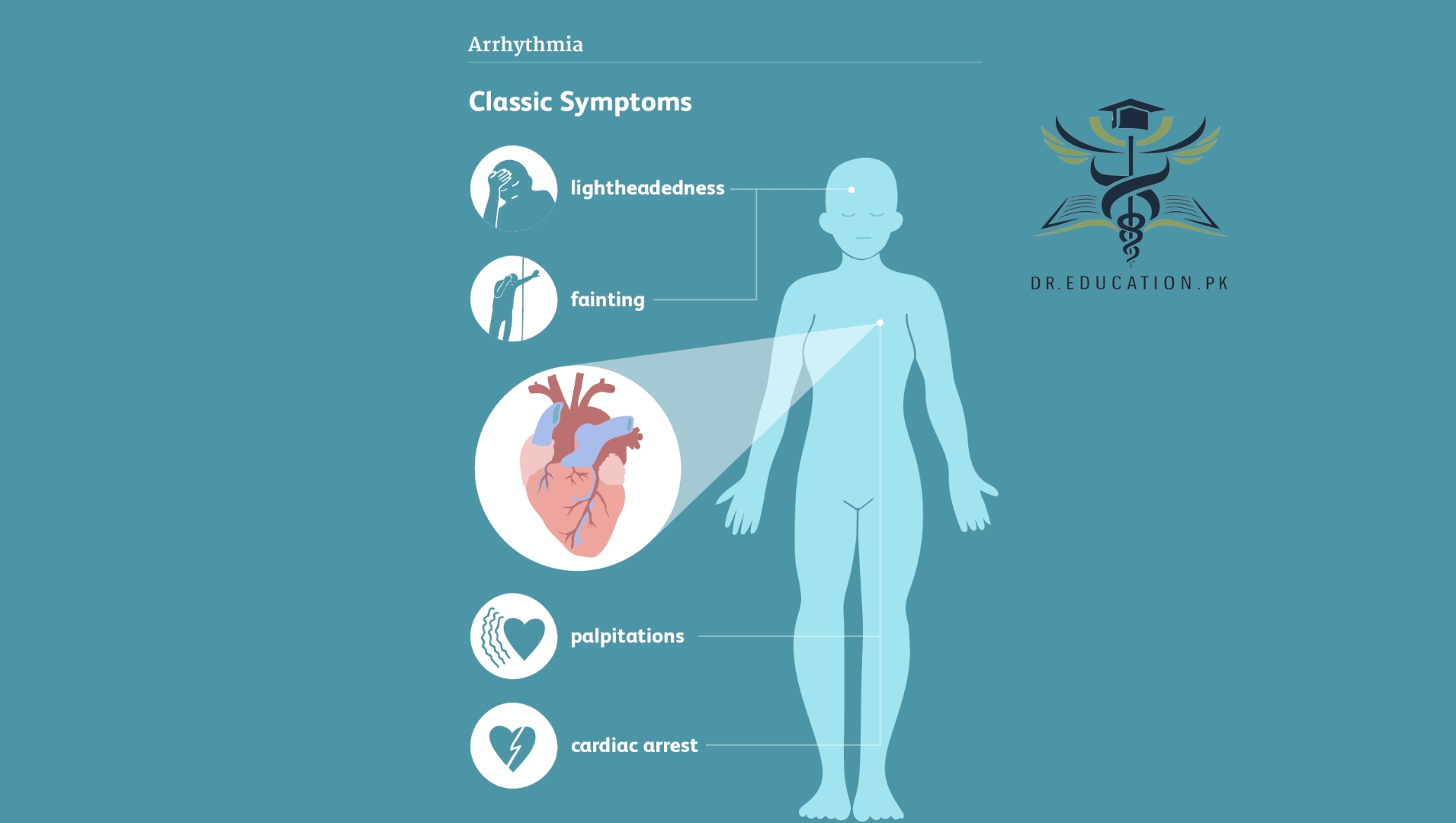
Keep track of when and how often you have symptoms, what you feel, what you were doing, and whether these things change over time. If your symptoms are very serious, such as difficulty breathing or chest pain, seek emergency medical care.
Diagnosis
Sometimes, especially if you do not have any noticeable symptoms of an arrhythmia, your doctor may find out you have one during a routine screening or physical for a competitive sport.
To diagnose an arrhythmia, your doctor will ask you about any symptoms, lifestyle habits, and other risk factors of arrhythmias. Your doctor will also do a physical exam, which may include these steps:
- Checking for swelling in your legs or feet, which could be a sign of an enlarged heart or heart failure
- Checking your pulse to find out how fast your heart is beating
- Listening to the rate and rhythm of your heartbeat
- Listening to your heart for a heart murmur
- Looking for signs of other diseases, such as thyroid disease, that could be causing arrhythmias
If you or your child has a high risk of arrhythmias, your doctor may screen you regularly with heart tests. These tests, described in the next section, can help your doctor check whether your heartbeat is too fast, too slow, or irregular, even if you do not have any symptoms. Some of these tests may look at the heart’s structure and function or may determine if you have risk factors for developing an arrhythmia.
Diagnostic tests
An electrocardiogram (EKG or ECG) is the most common test for diagnosing arrhythmias. An EKG records your heart’s electrical activity. Your doctor may do an EKG during a stress test, which records your heart’s activity when it is working hard and beating fast.
Your doctor may also do other tests to diagnose arrhythmias.
- Blood tests measure the level of certain substances in the blood, such as potassium or other electrolytes and thyroid hormone.
- Monitors for long-term recording include Holter monitors and implantable loop recorders. These record your heart rhythm while you do your normal activities. Holter monitors measure your heart rhythm using a device that is outside of your body and are usually used for short periods of time. For an implantable loop recorder, your doctor will place the device under your skin. The recorder transmits data to your doctor’s office. Implantable loop recorders may be worn for longer periods of time and may help your doctor figure out why you are having palpitations or fainting spells, especially if these symptoms do not happen very often.
- An electrophysiology study (EPS), which is performed by an EPS cardiologist, measures the electrical activity of your heart. The doctor threads a wire through a blood vessel to your heart. The wire electrically stimulates your heart and triggers any underlying arrhythmia if you have one. If you have another condition that may raise your risk, an EPS can help your doctor find out your risk of developing arrhythmias. An EPS also allows your doctor to test whether a treatment, such as medicine, will stop the problem.
- Tilt table testing may help find the cause of fainting spells. You lie on a table that moves from a lying-down position to an upright position. The change in position may cause you to faint. Your doctor watches your symptoms, heart rate, EKG reading, and blood pressure throughout the test.
- Genetic testing can check whether you have a type of arrhythmia that is caused by specific . This test is important when one or more of your close relatives has an arrhythmia caused by the same gene or had cardiac arrest.
- Heart imaging tests, such as computed tomography (CT) scans or cardiac magnetic resonance imaging (MRI), may check the structure of your heart chambers, show how well your heart is working, look for evidence of scar tissue in your heart muscle, or sometimes may look at your heart arteries.
Treatment
Arrhythmia refers to an abnormal heart rhythm, which can either be too fast, too slow, or irregular. The treatment of arrhythmia depends on the type, cause, severity, and symptoms of the condition. Here’s an overview of the most common treatments for arrhythmia:
1. Lifestyle Changes
- Diet: Reducing caffeine, alcohol, and nicotine intake can help prevent arrhythmias.
- Exercise: Regular physical activity can improve heart health and reduce stress.
- Stress management: Techniques like yoga, meditation, and breathing exercises can be helpful.
2. Medications
- Antiarrhythmic drugs: These medications help control heart rate and rhythm, such as:
- Beta-blockers (e.g., metoprolol, atenolol): Slow down the heart rate.
- Calcium channel blockers (e.g., diltiazem, verapamil): Relax blood vessels and reduce heart rate.
- Sodium or potassium channel blockers (e.g., amiodarone, flecainide): Stabilize electrical activity in the heart.
- Anticoagulants (blood thinners): Prevent blood clots in patients with arrhythmias like atrial fibrillation (e.g., warfarin, dabigatran).
3. Cardioversion
- A procedure used for certain types of arrhythmias (like atrial fibrillation). It can be done using:
- Electrical cardioversion: Electric shock to the heart to restore normal rhythm.
- Pharmacological cardioversion: Medications to restore normal rhythm.
4. Pacemaker
- A small device implanted under the skin to regulate a slow heart rate (bradycardia). It sends electrical signals to stimulate the heart to beat at a regular pace.
5. Implantable Cardioverter-Defibrillator (ICD)
- This device is implanted in patients at high risk of life-threatening arrhythmias (like ventricular fibrillation). It monitors the heart rhythm and can deliver a shock to restore a normal rhythm when needed.
6. Catheter Ablation
- A procedure used to destroy small areas of heart tissue that cause abnormal electrical signals. A catheter is inserted through blood vessels to the heart, and radiofrequency energy is used to create scars that block abnormal electrical pathways.
7. Surgery
- In severe cases, surgical interventions may be required:
- Maze procedure: Surgical scars are created in the heart tissue to redirect electrical signals.
- Coronary bypass surgery: If arrhythmia is due to coronary artery disease, this surgery may improve blood flow and reduce arrhythmia risk.
8. Lifestyle Modifications and Follow-up
- Regular monitoring of heart rate, blood pressure, and cholesterol levels.
- Adherence to prescribed medications and follow-up visits with healthcare providers.
- Wearable devices like smartwatches and Holter monitors can help track arrhythmia episodes.
The choice of treatment depends on the specific arrhythmia type and individual health factors. It’s essential to consult a healthcare provider to determine the best treatment plan.
Lifestyle and home remedies
Making lifestyle changes can help keep your heart as healthy as possible.
Examples of heart-healthy lifestyle changes are:
- Eat heart-healthy foods. Eat a healthy diet that’s low in salt and solid fats and rich in fruits, vegetables and whole grains.
- Get regular exercise. Try to exercise for at least 30 minutes on most days.
- Don’t smoke. If you smoke and can’t quit on your own, talk to a healthcare professional about strategies or programs to help.
- Maintain a healthy weight. Being overweight increases the risk of heart disease. Talk with your care team to set realistic goals for body mass index (BMI) and weight.
- Control blood pressure and cholesterol. High blood pressure and high cholesterol increase the risk of heart disease. Make lifestyle changes and take medicines as directed to manage high blood pressure or high cholesterol.
- Limit alcohol. If you choose to drink alcohol, do so in moderation. For healthy adults, that means up to one drink a day for women of all ages and men older than age 65, and up to two drinks a day for men age 65 and younger.
- Practice good sleep habits. Poor sleep may increase the risk of heart disease and other chronic conditions. Adults should aim to get 7 to 9 hours of sleep daily. Go to bed and wake at the same time every day, including on weekends. If you have trouble sleeping, talk to a healthcare professional about strategies that might help.
- Manage stress. Managing stress is an important step in keeping the heart healthy. Getting more exercise, practicing mindfulness and connecting with others in support groups are some ways to reduce and manage stress.
When to see a doctor?
You should see a doctor if you experience any of the following symptoms, as they may be signs of an arrhythmia or another heart condition:
1. Palpitations
- Sensation of a rapid, fluttering, or irregular heartbeat.
- Feeling like your heart is skipping beats or pounding.
2. Dizziness or Lightheadedness
- Frequent episodes of dizziness or feeling faint, especially if it occurs suddenly.
- Unexplained episodes of near-fainting (pre-syncope) or fainting (syncope).
3. Shortness of Breath
- Difficulty breathing, especially during rest or mild exertion.
- A feeling of breathlessness that comes on suddenly.
4. Chest Pain or Discomfort
- Any pain, pressure, or discomfort in your chest that lasts for more than a few minutes.
- Pain that radiates to your arms, back, neck, or jaw could indicate a more serious issue like a heart attack.
5. Fatigue or Weakness
- Unexplained or sudden onset of fatigue, weakness, or feeling easily tired, especially if it interferes with daily activities.
- Persistent tiredness that doesn’t improve with rest.
6. Rapid or Slow Heart Rate
- Consistently having a heart rate that is too fast (above 100 beats per minute) or too slow (below 60 beats per minute), especially if you feel symptoms like weakness or dizziness.
7. Swelling
- Swelling in the legs, ankles, feet, or abdomen (edema) may indicate heart failure or other cardiovascular issues.
8. Unexplained Episodes of Anxiety
- Anxiety or panic-like symptoms that are accompanied by palpitations, shortness of breath, or dizziness could indicate an arrhythmia rather than a psychological cause.
9. History of Heart Disease or Risk Factors
- If you have a history of heart disease, high blood pressure, diabetes, or a family history of arrhythmias or sudden cardiac death, it’s important to consult a doctor regularly to monitor your heart health.
10. During Exercise
- If you experience any abnormal heart symptoms during or after physical activity, such as palpitations, chest pain, or fainting, it could indicate an underlying heart condition.
When to Seek Emergency Care:
- Sudden chest pain or pressure: This could be a sign of a heart attack.
- Sudden onset of severe shortness of breath: This could indicate a serious arrhythmia or heart failure.
- Loss of consciousness: If you or someone around you faints or has a sudden loss of consciousness, immediate medical attention is required.
- Ventricular fibrillation (VFib): If a person experiences a sudden collapse, no pulse, and is unresponsive, they may have VFib and need emergency care, including CPR and defibrillation.
It is always better to consult a healthcare provider if you are unsure about symptoms, especially if they are new or worsening. Early detection and treatment can prevent complications and improve outcomes.
Conclusion from Dreducation.pk
Arrhythmias, or irregular heartbeats, are conditions that can significantly impact heart function, ranging from mild to life-threatening. Understanding the types, causes, and symptoms of arrhythmias is crucial for early detection and management. Treatment options vary depending on the severity and type of arrhythmia and may include lifestyle changes, medications, medical procedures, or surgery. Regular medical consultation and monitoring are essential, especially if symptoms like palpitations, dizziness, chest pain, or shortness of breath occur. Early intervention can improve outcomes and help maintain heart health, preventing potential complications.


