
What is Heart Palpitation?
How do you pronounce Palpitation?
Palpitation is pronounced as (pal-pih-TAY-shuns).
Heart palpitations are feelings of having a fast-beating, fluttering or pounding heart. Stress, exercise, medication or, rarely, a medical condition can trigger them.
Although heart palpitations can be worrisome, they’re usually harmless. Rarely, heart palpitations can be a symptom of a more serious heart condition, such as an irregular heartbeat (arrhythmia), that might require treatment.
Overview
Heart palpitations are the feelings of having a rapid, fluttering, or pounding heartbeat. They can be triggered by stress, exercise, medication, or even certain foods. While palpitations are usually harmless, they can sometimes indicate a serious underlying condition.
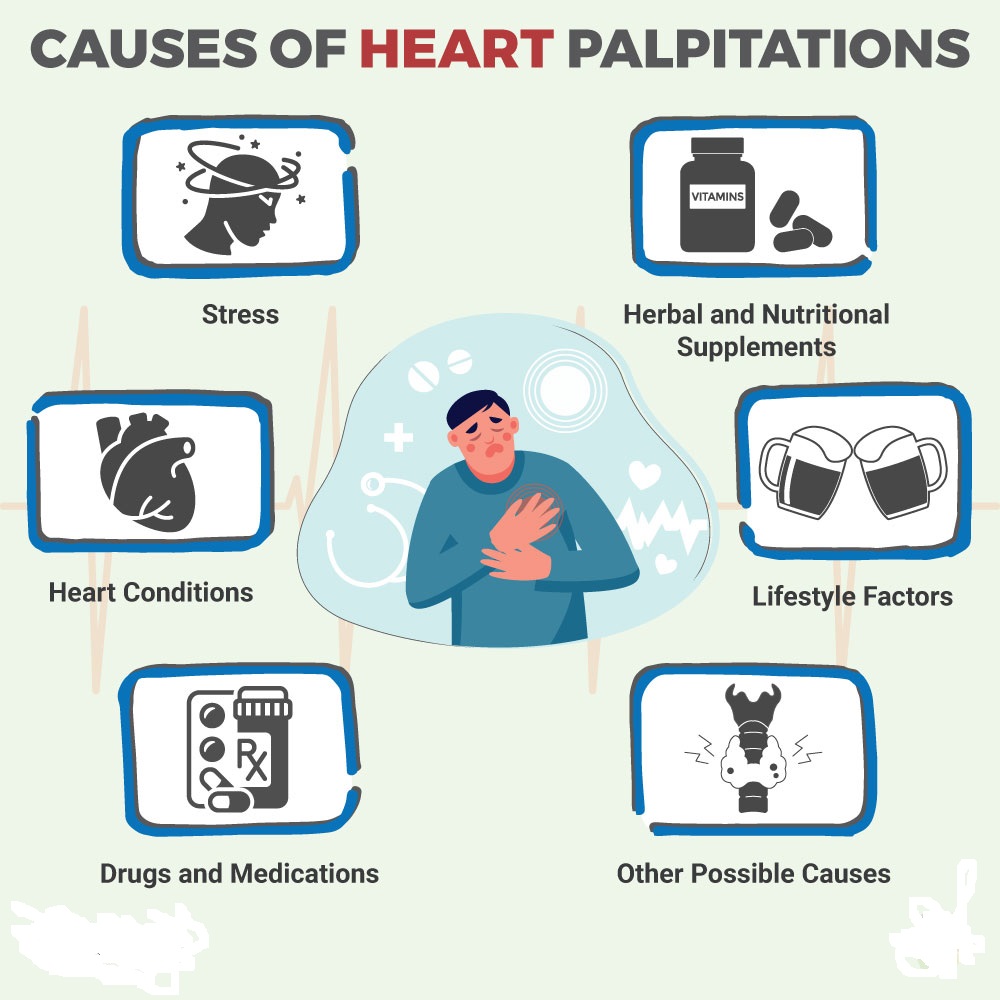
Causes of Heart Palpitations
- Stress and Anxiety: Emotional stress, panic attacks, or anxiety can lead to palpitations.
- Exercise: Intense physical activity can temporarily cause palpitations.
- Stimulants: Caffeine, nicotine, alcohol, or drugs like cocaine can provoke palpitations.
- Medications: Certain asthma medications, decongestants, and antidepressants may trigger palpitations.
- Hormonal Changes: Pregnancy, menopause, or menstruation can sometimes cause palpitations due to hormonal fluctuations.
- Medical Conditions:
- Hyperthyroidism
- Low blood sugar
- Anemia
- Fever
- Electrolyte imbalances (like low potassium or magnesium)
- Heart conditions like arrhythmias, atrial fibrillation, or heart failure
Symptoms of Heart Palpitations
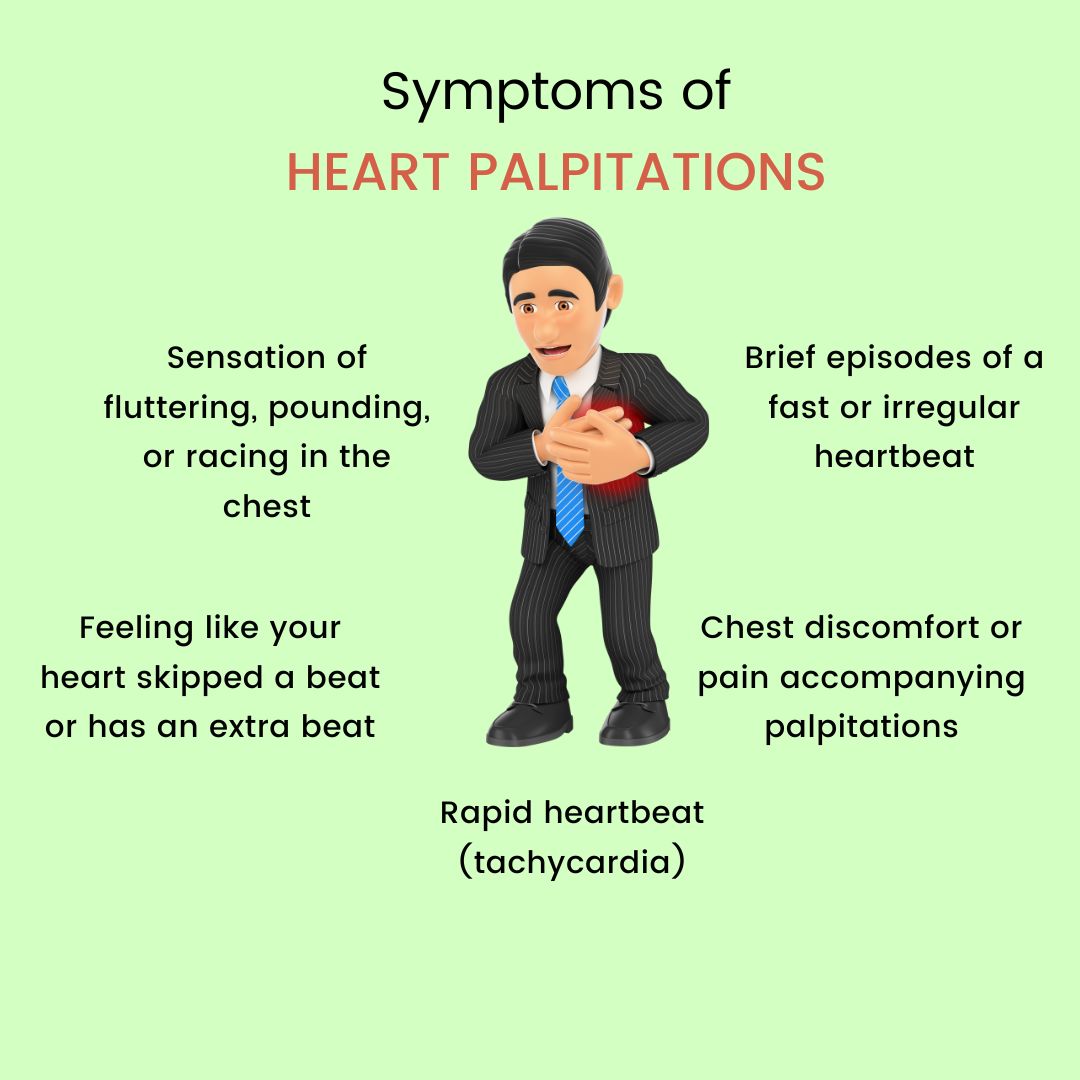
- Fluttering or rapid heartbeat
- Skipping beats
- Pounding heart
- Discomfort in the chest
- Dizziness or light-headedness
- Shortness of breath
Risk Factors
- High Levels of Stress or Anxiety: Emotional stress can increase the likelihood of palpitations.
- Stimulant Use: High intake of caffeine, alcohol, or nicotine.
- Thyroid Disease: Hyperthyroidism increases the risk.
- Heart Disease: Any pre-existing heart condition such as arrhythmias or previous heart attack.
- Dehydration: Imbalance in electrolytes can lead to palpitations.
- Pregnancy: Hormonal changes during pregnancy can trigger palpitations.
Treatment of Heart Palpitations
Treatment depends on the cause:
- Lifestyle Changes:
- Reduce stress with relaxation techniques such as meditation, yoga, or deep breathing.
- Avoid stimulants like caffeine, alcohol, and nicotine.
- Stay hydrated, especially during exercise.
- Medications: If caused by an underlying medical condition, the doctor may prescribe medications to treat arrhythmias or anxiety.
- Managing Medical Conditions: Treating hyperthyroidism, electrolyte imbalances, or other medical conditions can help control palpitations.
- Avoiding Certain Triggers: Identifying and avoiding triggers like specific foods or medications may reduce palpitations.
In rare cases, if palpitations are due to a serious heart condition, procedures like catheter ablation or a pacemaker might be recommended.
If palpitations are persistent or accompanied by chest pain, fainting, or shortness of breath, it’s essential to seek medical attention.
Prevention of Heart Palpitations
Preventing heart palpitations often involves making lifestyle adjustments and managing underlying health conditions. Here are key strategies for prevention:
- Manage Stress:
- Practice relaxation techniques like deep breathing, yoga, or meditation.
- Engage in regular physical activity to reduce stress levels.
- Consider counseling or therapy if stress and anxiety are chronic.
- Avoid Stimulants:
- Limit or avoid caffeine, alcohol, and nicotine.
- Avoid energy drinks and other products with high caffeine content.
- Be cautious with stimulant medications such as decongestants and diet pills.
- Stay Hydrated:
- Drink plenty of water throughout the day to maintain electrolyte balance.
- Especially important during exercise or hot weather.
- Follow a Heart-Healthy Diet:
- Eat a balanced diet rich in fruits, vegetables, whole grains, and lean proteins.
- Avoid excessive sugar, salt, and fatty foods, which can contribute to heart conditions.
- Maintain a Healthy Weight:
- Being overweight can increase the risk of heart problems and palpitations.
- Regular exercise and a healthy diet can help manage weight.
- Monitor Medication Side Effects:
- Review medications with your doctor to ensure they are not contributing to palpitations.
- Avoid overuse of non-prescription drugs like decongestants or certain supplements.
- Address Underlying Medical Conditions:
- Treat conditions like hyperthyroidism, anemia, or electrolyte imbalances.
- Regular check-ups can help identify and manage health issues that may cause palpitations.
- Get Enough Sleep:
- Aim for 7–9 hours of quality sleep per night.
- Poor sleep or sleep disorders like sleep apnea can increase the risk of palpitations.
- Limit Heavy Exercise:
- While regular exercise is important, extreme physical exertion may trigger palpitations in some individuals. Find a balanced exercise routine.
- Monitor Your Heart:
- Keep track of heart rate and any palpitations.
- Seek medical advice if there are significant changes or palpitations occur frequently.
By adopting these preventive measures, most people can reduce the occurrence of heart palpitations and support overall heart health.
When to See a Doctor:
- Palpitations Last Too Long:
- If they last more than a few minutes and do not go away on their own.
- Accompanied by Other Symptoms:
- Chest pain or discomfort
- Shortness of breath
- Dizziness or feeling faint
- Fainting (syncope)
- Severe fatigue
- Sweating without any obvious cause
- Irregular Heartbeat:
- If you feel like your heart is racing, skipping beats, or beating irregularly, particularly if it’s new or worsening.
- History of Heart Conditions:
- If you have a history of heart disease, heart attack, or any other cardiovascular issues and experience palpitations.
- Family History of Heart Problems:
- If your family has a history of sudden cardiac death or heart disease, it’s important to be extra cautious with symptoms like palpitations.
- Palpitations Occur with Exercise:
- If palpitations happen during or immediately after physical activity, it could indicate a more serious underlying condition.
- Palpitations Due to Medication:
- If you believe that a new medication or supplement is triggering your palpitations, talk to your doctor for a possible adjustment.
- Unexplained Palpitations:
- If the palpitations occur without any clear triggers or reasons, it’s important to get evaluated.
Emergency Situations:
Seek immediate medical attention if you experience palpitations along with:
- Severe chest pain, pressure, or tightness (could indicate a heart attack).
- Difficulty breathing or feeling like you can’t catch your breath.
- Fainting or near-fainting spells.
Early medical evaluation can help rule out serious conditions and provide proper treatment if needed.


